When One Store Owner's Wild Idea Accidentally Invented Modern Shopping
The Day Shopping Changed Forever
Picture this: you walk into a grocery store, grab a cart, and wander the aisles picking out cereal, milk, and whatever catches your eye. Seems normal, right? But until 1916, this scenario would have been absolutely revolutionary — and slightly scandalous.
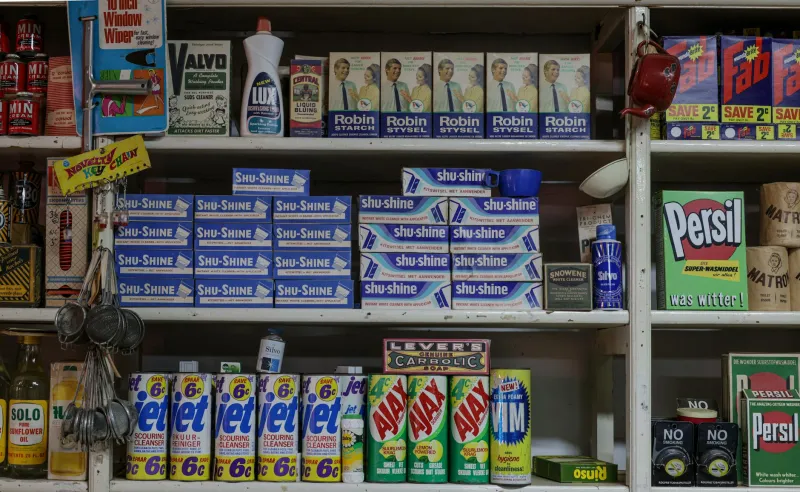
For most of human history, shopping meant standing at a counter and telling a clerk what you wanted. The clerk would disappear into the back, gather your items, and return with your order. You paid, and that was that. No browsing. No impulse purchases. No "quick trip" that somehow turns into a $200 expedition.
The Memphis Grocer Who Thought Customers Could Be Trusted
Clarence Saunders was running a small grocery operation in Memphis, Tennessee, when he had what everyone thought was a terrible idea. What if customers could just... walk around the store themselves? What if they could see all the products, compare prices, and make their own choices?
His friends thought he'd lost his mind. Store owners believed customers would steal everything. Industry experts predicted chaos. But Saunders had noticed something interesting at local cafeterias — people seemed perfectly capable of walking through a line and selecting their own food without causing mayhem.
On September 6, 1916, he opened the first Piggly Wiggly store in Memphis. The name alone was enough to raise eyebrows, but the concept inside was even more shocking.
 Photo: Piggly Wiggly, via www.lastearth.net
The Turnstile Revolution
Saunders designed his store like a maze. Customers entered through a turnstile, grabbed a basket, and followed a predetermined path through aisles lined with clearly marked, pre-packaged goods. Price tags were visible. Products were within reach. At the end, they paid a cashier and exited through another turnstile.
It was brilliant in its simplicity, but it required a complete reimagining of retail. Saunders had to figure out packaging, pricing, store layout, inventory management, and customer flow. He essentially invented modern retail design from scratch.
The concept was so revolutionary that he received a patent for the "self-serving store" in 1917. Patent number 1,242,872 covered everything from the store layout to the shopping basket system. For a brief moment, Clarence Saunders owned the exclusive rights to self-service shopping.
Success, Swagger, and Spectacular Failure
Piggly Wiggly exploded across the South. By 1922, there were 1,200 stores in 29 states. Saunders became wealthy, built a massive mansion in Memphis, and started acting like the retail king of America. He even tried to corner the cotton market.
That's where things went sideways.
In 1923, Wall Street speculators began short-selling Piggly Wiggly stock, betting the company would fail. Saunders, convinced his business was sound, decided to buy up all available shares to prove the speculators wrong. He borrowed heavily, mortgaged everything, and went all-in on his own company.
The plan backfired spectacularly. The New York Stock Exchange suspended trading before Saunders could complete his corner, and he found himself financially ruined. Creditors seized everything — including his precious patent.
The Accidental Gift to America
Here's where the story gets really interesting. When Saunders went bankrupt, his creditors didn't know what to do with a patent for "self-service shopping." It seemed like a niche concept tied to one man's quirky grocery chain.
So they essentially released it into the public domain.
Suddenly, every retailer in America could copy the Piggly Wiggly model without paying royalties. And copy they did. Kroger, Safeway, A&P — every major grocery chain quickly adopted self-service shopping. The concept spread from groceries to department stores, pharmacies, and eventually every type of retail imaginable.
How One Patent Changed Everything
The ripple effects were enormous. Self-service shopping required new types of packaging, which led to the rise of brand marketing. It needed different store layouts, which changed American architecture and urban planning. It made impulse buying possible, which transformed how companies thought about product placement and advertising.
Shopping centers and suburban malls were designed around the self-service model. The modern supermarket, with its wide aisles and end-cap displays, traces directly back to Saunders' original patent. Even online shopping follows the same basic principle — browse products yourself, add them to a cart, and check out.
The Man Who Changed Shopping (Twice)
Saunders wasn't done innovating. After losing Piggly Wiggly, he tried again with "Clarence Saunders, Sole Owner of My Name Stores" (yes, that was the actual name). Later, he developed an early concept for automated shopping that was decades ahead of its time.
But his original idea — letting customers serve themselves — had already reshaped American commerce forever. What started as one grocer's experiment in Memphis became the foundation for modern retail, all because a bankruptcy court accidentally gave away the blueprint.
The next time you're wandering through Target at 10 PM buying things you definitely don't need, remember Clarence Saunders. His financial ruin became America's shopping revolution.