The Victorian Paranoia That Left America With the World's Weirdest Bathroom Setup
The Victorian Paranoia That Left America With the World's Weirdest Bathroom Setup
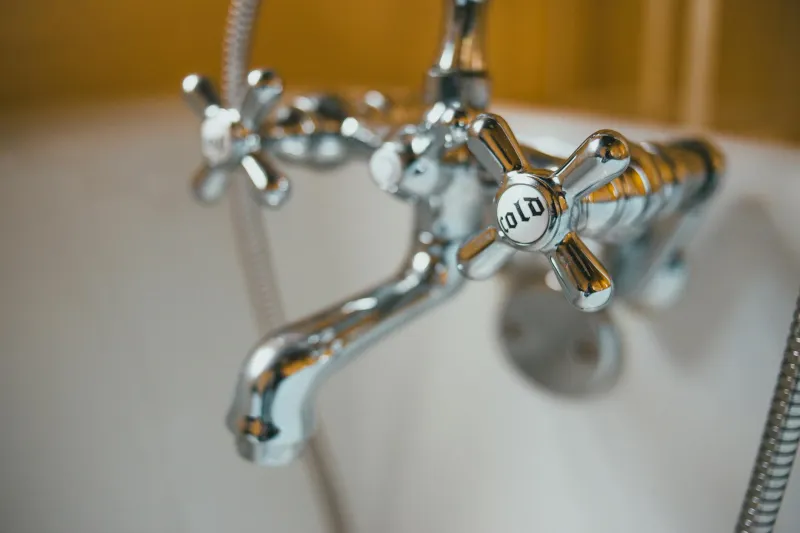
Every foreign visitor to America eventually has the same bathroom experience: standing at a sink, frantically alternating between scalding and freezing water while trying to wash their hands. They're encountering one of America's most persistent engineering quirks—separate hot and cold faucets that refuse to cooperate in creating comfortable water temperature.
To most of the world, American bathroom faucets seem like a deliberate act of hostility toward basic human comfort. But this isn't sadistic design; it's the lingering ghost of Victorian-era paranoia about water contamination, preserved in American building codes long after the original threat disappeared.
The Great Water Panic of the 1800s
In the late 19th century, American cities were grappling with rapid industrialization and the public health disasters that came with it. Cholera outbreaks, typhoid epidemics, and mysterious waterborne illnesses were killing thousands of people annually. The connection between contaminated water and disease was becoming clear, but the solutions were still primitive and often counterproductive.
Public health officials developed an intense fear of "back-siphonage"—the possibility that contaminated water could flow backward through pipes and contaminate the entire municipal water supply. The scenario haunted urban planners: imagine if diseased water from one building could somehow reverse course and poison everyone connected to the same water system.
This wasn't entirely irrational paranoia. Early plumbing systems were crude affairs with inconsistent water pressure and questionable pipe integrity. Cross-contamination was a real risk, especially in rapidly growing cities where infrastructure struggled to keep pace with population growth.
The Engineering Solution That Became a Lifestyle
American plumbers and building inspectors developed a simple but radical solution: complete separation of hot and cold water systems. If the two supplies never mixed inside the building, contamination couldn't travel from one to the other. Hot water came from one set of pipes, cold water from another, and never the twain shall meet.
This approach required separate faucets, separate valves, and separate everything. Mixing valves—devices that could blend hot and cold water to achieve comfortable temperatures—were viewed with deep suspicion. They represented potential contamination points where diseased water could theoretically flow from one system into another.
Building codes across America enshrined this separation as mandatory. By the early 1900s, it was illegal in most American cities to install plumbing that allowed hot and cold water to mix before reaching the user. The two-faucet system wasn't just preferred; it was required by law.
The World Moves On, America Stays Put
While American cities were mandating separate faucets, the rest of the world was solving the same contamination problems through different approaches. European plumbers developed better pipe materials, improved pressure regulation, and more sophisticated mixing valves that eliminated back-siphonage risks without sacrificing user comfort.
By the 1920s, most developed countries had moved to single-handle faucets that could safely blend hot and cold water. The contamination fears that had driven American plumbing design were being addressed through better engineering rather than complete system separation.
But American building codes are notoriously resistant to change. Once the two-faucet requirement was embedded in municipal regulations, it took on a life of its own. Contractors learned to work with separate systems, manufacturers specialized in producing compatible fixtures, and entire generations of Americans grew up thinking that bathroom torture was normal.
The Persistence of Obsolete Engineering
By the 1950s, American water treatment and distribution had advanced far beyond the contamination risks that had originally justified separate faucets. Municipal water systems featured sophisticated filtration, chemical treatment, and pressure regulation that made back-siphonage virtually impossible.
Yet the two-faucet system persisted, protected by building codes that nobody wanted to challenge. Changing plumbing regulations required extensive bureaucratic processes, industry lobbying, and the political will to admit that existing standards might be unnecessarily complicated.
Meanwhile, American travelers visiting Europe or Asia began encountering bathroom fixtures that seemed almost magical in their simplicity. A single handle that could produce any temperature from ice-cold to scalding hot? Revolutionary! But somehow impossible to legally install in most American buildings.
The Cultural Adaptation
Generations of Americans developed elaborate workarounds for their dysfunctional faucets. The "hot-cold dance" became a standard part of American bathroom culture—rapidly alternating between taps while trying to achieve tolerable water temperature. Parents taught children the complex choreography required for basic hand washing.
Some Americans even convinced themselves that separate faucets were superior, offering more "precise control" over water temperature. This was mostly rationalization, but it demonstrated how people can adapt to almost any engineering constraint if they're forced to live with it long enough.
Hotel chains catering to international visitors began quietly installing single-handle faucets in the 1970s and 80s, often requiring special permits and variances from local building codes. The contrast with standard American bathrooms became increasingly obvious and embarrassing.
The Slow Retreat of Regulatory Inertia
Starting in the 1990s, American building codes began slowly relaxing the requirements for separate faucets, but change came in fits and starts. Some cities updated their regulations quickly; others maintained the old requirements well into the 21st century. The result was a patchwork of plumbing laws that varied dramatically between neighboring jurisdictions.
Today, most American cities allow single-handle faucets, but millions of existing buildings still feature the old two-faucet systems. Retrofitting isn't required, so the Victorian-era engineering solution continues to frustrate bathroom users across the country.
The Enduring Legacy of Outdated Fears
American bathroom faucets represent a perfect case study in how engineering solutions can outlast the problems they were designed to solve. The contamination fears that drove separate faucet requirements were legitimate in the 1800s, but the regulatory response became so entrenched that it persisted decades after better solutions became available.
Every time you struggle with separate hot and cold taps, you're experiencing the lingering effects of Victorian-era public health paranoia. It's a reminder that sometimes the most persistent design problems aren't technical challenges—they're institutional failures to adapt when circumstances change.