The Ugly Plastic Jug That Quietly Rearranged the American Kitchen
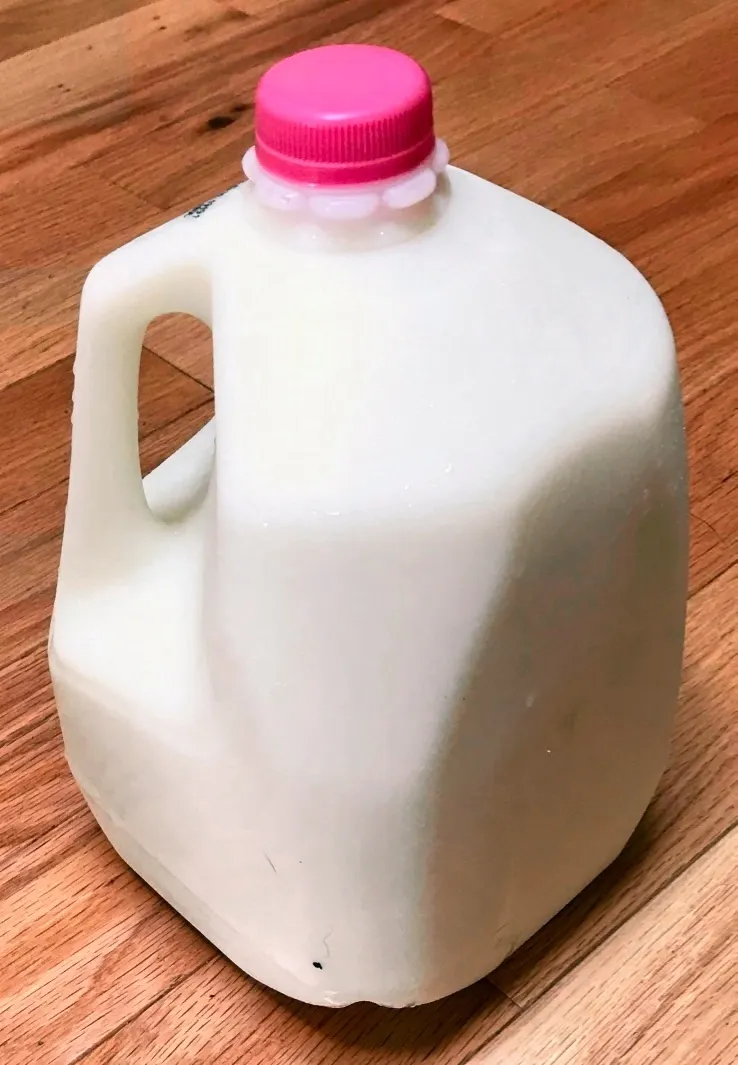
Photo: Rlsheehan, CC BY-SA 4.0, via Wikimedia Commons
It's easy to overlook the plastic milk jug. It sits in the refrigerator door, slightly awkward to pour from, faintly industrial in a way that glass never was. It doesn't look like the product of any particular design ambition. It looks like the cheapest possible solution to a straightforward problem. Which is, more or less, exactly what it was—and that's precisely why it changed everything.
The World the Milkman Built
To understand what the plastic jug disrupted, you have to understand what it replaced—not just a container, but an entire domestic system.
For the first half of the 20th century, milk delivery was one of the most reliable rhythms of American home life. The milkman arrived before dawn, swapped out empty glass bottles for full ones, and left. Customers left notes in the empties if they wanted to change their order. The glass bottles were collected, sterilized, and refilled. Nothing was wasted. The whole system was, by modern standards, remarkably efficient.
In 1950, roughly half of all milk consumed in the United States was still delivered to homes this way. Dairy companies maintained fleets of refrigerated trucks, employed thousands of drivers, and operated a logistical network that touched nearly every residential neighborhood in the country. The milkman wasn't just a delivery service—he was a feature of American daily life, a familiar presence in the way the mail carrier or the corner pharmacist was familiar.
Glass bottles were central to this system. They were heavy, breakable, and required the return-and-refill infrastructure that only a dedicated delivery network could sustain. If you wanted to move milk through a supermarket instead of a doorstep, glass was a serious liability.
The Chemist and the Carton That Wasn't Enough
By the late 1950s, supermarkets were already chipping away at home delivery. Waxed cardboard cartons—introduced in the 1930s—had made it possible to stock milk on store shelves without the return-bottle logistics, and chains like Safeway and A&P were expanding rapidly into suburban America. Milk sales through grocery stores were climbing every year.
But cardboard cartons had their own problems. They leaked. They absorbed odors. They were difficult to reseal. Consumers tolerated them because the alternative was driving to a separate dairy, but they weren't exactly beloved.
In 1964, a chemist named Victor Nally, working for a plastics manufacturer, developed a high-density polyethylene jug—HDPE—that could hold a gallon of liquid without leaking, without breaking, and at a fraction of the weight of glass. The manufacturing process was fast and cheap. The containers were disposable, eliminating the return infrastructure entirely.
The dairy industry's initial reaction was skeptical. Consumers, when surveyed, said they didn't trust plastic for food storage. There was a lingering sense that milk in plastic would taste different—cheaper, somehow less pure than the glass-bottled version. Early focus groups were not encouraging.
What changed the calculation wasn't consumer enthusiasm. It was economics.
The Supermarket Did the Math
For grocery chains, the plastic jug solved a series of problems simultaneously. It was lighter than glass, which reduced shipping costs. It was unbreakable, which reduced spoilage losses. It was cheaper to produce than either glass or waxed cardboard. And it stacked efficiently on refrigerated shelves, which meant more units per linear foot of retail space.
Supermarkets began pushing dairy suppliers to adopt the new containers through the late 1960s. By the early 1970s, the transition was accelerating. Home delivery, which had already been declining for a decade, lost its final competitive advantage: the superior container. Plastic jugs were cheaper and more convenient for store-bought milk, and that was the argument that closed the debate.
By 1975, home milk delivery had collapsed from a mainstream institution to a niche service. The milkman—as a cultural fixture—was effectively gone within a single decade.
What the Jug Changed Beyond the Bottle
The effects rippled outward in ways nobody quite anticipated.
Refrigerator design changed. The gallon jug became the standard unit of milk storage, and appliance manufacturers began engineering refrigerator doors specifically to accommodate it. The deep door shelf—now standard on virtually every American refrigerator—exists primarily because of the plastic gallon jug's dimensions. Families reorganized their shopping habits around it: instead of daily or every-other-day delivery, a once-weekly supermarket run with a gallon jug became the new normal.
That shift in shopping frequency had downstream effects on everything from how families planned meals to how much other food they bought in a single trip. The weekly grocery run, now a deeply ingrained American habit, was partly structured around the assumption that a gallon of milk would last roughly seven days. The jug set a rhythm.
The dairy industry itself was reshaped. Without the delivery infrastructure to maintain, smaller regional dairies lost a key competitive advantage. Consolidation followed. Today, a handful of massive dairy processors supply most of the milk in the country—a concentration of ownership that would have been unimaginable in the era of local milkmen.
The Object Nobody Wanted That Won Anyway
The plastic milk jug never had a champion. Nobody campaigned for it, no designer took credit for it, and no consumer advocacy group demanded it. It won because it was cheap, functional, and aligned with the economic interests of the retail grocery industry at a moment when that industry was rapidly gaining power over American food distribution.
It's not a beautiful object. It never was. But trace back the modern American kitchen—the weekly shopping trip, the refrigerator layout, the consolidated dairy aisle—and you'll find the plastic jug sitting quietly at the center of it all, doing exactly what it was designed to do.