The Lab Mistake That Ended Up on Every Desk in America
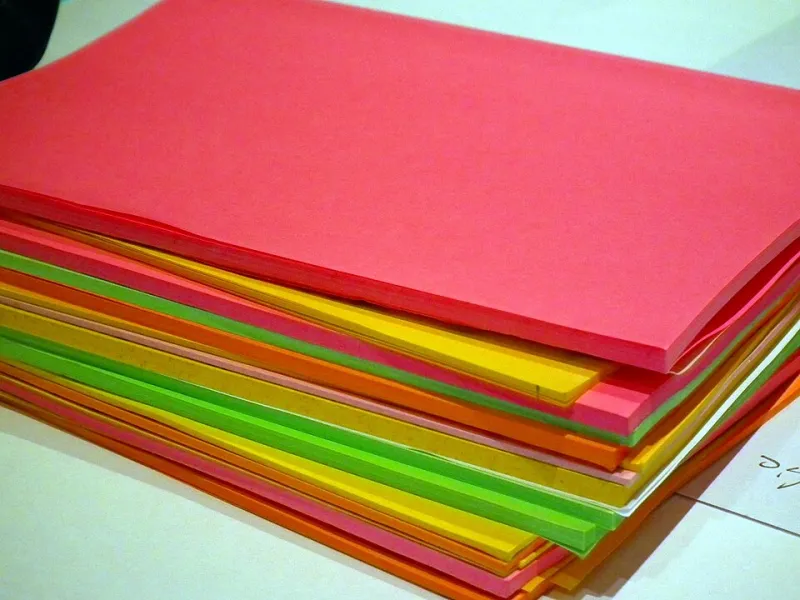
Photo: Ramesh NG, CC BY-SA 2.0, via Wikimedia Commons
Look around any American office, kitchen, or college dorm room and you'll find them. Yellow squares. Pink squares. Neon green squares. Stuck to monitors, to refrigerators, to the edge of textbooks, to bathroom mirrors. The sticky note is so ordinary now that nobody really thinks about it. Which makes its origin story all the more remarkable—because the thing almost never happened.
A Chemist Trying to Build Something Stronger
In 1968, Spencer Silver was working as a research chemist at 3M's labs in St. Paul, Minnesota. His assignment was straightforward: develop a new, high-strength adhesive. 3M was in the business of making tape, and stronger tape meant better tape, and better tape meant more money. Silver understood the brief.
What he created instead was something almost philosophically opposite. His new adhesive was weak. It bonded lightly to surfaces. It peeled off cleanly without leaving residue. And—strangest of all—it could be stuck, removed, and stuck again without losing its grip. Silver had accidentally engineered an adhesive that didn't really want to commit.
By any conventional measure, this was a failure. 3M was not in the market for adhesives that didn't adhere particularly well. Silver filed his patent in 1968 anyway, wrote up his notes, and then did something unusual: he refused to let the idea die.
For the next five years, Silver gave internal seminars at 3M, essentially doing a roadshow for a product nobody wanted. He talked to engineers, to product developers, to anyone who would sit still long enough to listen. He was convinced the adhesive had a use—he just couldn't figure out what it was. The seminars were politely received and largely ignored.
The Hymnal Problem
Enter Art Fry.
Fry was a 3M product development engineer, and he happened to attend one of Silver's in-house presentations sometime around 1973. He filed the information away somewhere in the back of his mind and didn't think about it again—until a Sunday morning at his church in North St. Paul.
Fry sang in his church choir, and like most choir members, he used small paper bookmarks to mark the pages of his hymnal. The problem was that the bookmarks kept falling out. Every week, the same frustration: you'd flip to your marked page and the bookmark would have migrated to the floor, or the back of the book, or nowhere at all. It was a small annoyance, but it was persistent.
During a particularly dull sermon—Fry's own description—his mind drifted back to Silver's seminar. A light adhesive. Repositionable. Leaves no residue. Suddenly the use case was obvious: a bookmark that stayed where you put it, but came off cleanly when you didn't need it anymore.
Fry went back to work on Monday and started experimenting. He got access to Silver's adhesive formula and began coating small strips of paper. The results were immediately promising. The bookmarks stayed in place. They peeled off without tearing the page. They could be moved and reapplied. The hymnal survived intact.
From Bookmark to Business
Fry quickly realized the invention was bigger than a choir problem. The coated paper strips weren't just good bookmarks—they were a new kind of communication tool. You could write on them. You could attach a note to a document without stapling or paper-clipping it. You could leave a message on someone's desk that wouldn't blow away or get buried.
He began leaving prototype notes for his colleagues. The reaction was immediate and almost unanimous: people wanted more. His supervisor at 3M reportedly sent back Fry's original test note with a reply written directly on it, attached to a report—which was, in a sense, the first sticky note conversation in history.
But convincing 3M's leadership was another matter. The company ran market research, and the results were underwhelming. Consumers, surveyed in the abstract, couldn't see why they'd pay for paper that barely stuck to things. The product was nearly shelved.
What saved it was a field test. In 1977, 3M distributed free samples in Boise, Idaho, asking people to try the product—then called Press 'n Peel—and report back. The reorder rate was overwhelming. Once people had used them, they didn't want to stop. The product launched nationally in 1980 under a new name: Post-it Notes.
Within two years, Post-it Notes were one of 3M's top-selling products. They've never really stopped being that.
Why the Story Still Sticks
What makes this origin worth tracing back isn't just the accidental chemistry—it's the twelve-year gap between invention and product launch. Silver created the adhesive in 1968. Post-it Notes reached American consumers in 1980. In between, a single person kept an idea alive through sheer stubbornness, and a second person made a connection during a church service.
The sticky note is now a $1 billion-plus annual business for 3M. It comes in over 600 varieties and is sold in more than 100 countries. There are digital versions in every major operating system, apps built around the concept, and entire productivity philosophies organized around the humble square of repositionable paper.
All because a chemist made something weak when he was supposed to make something strong—and refused to throw it away.