The Shoplifting Scare That Accidentally Invented the Loyalty Card
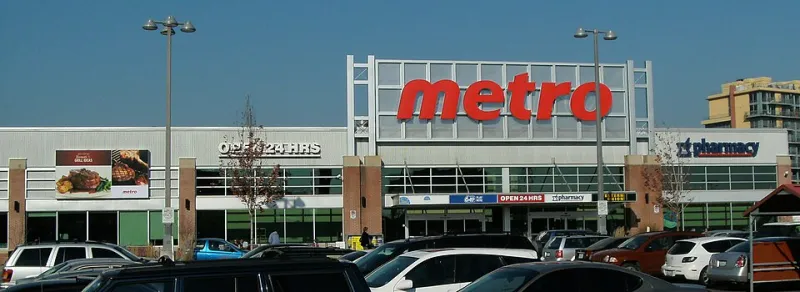
Photo: Eastmain, CC BY-SA 3.0, via Wikimedia Commons
You've got them in your wallet, on your keychain, and saved in at least three different apps on your phone. Grocery loyalty cards are so woven into everyday American shopping that most people never stop to ask a basic question: where did this thing even come from?
The answer, it turns out, starts not with a marketing genius in a Manhattan boardroom — but with a frustrated store manager in Ohio trying to figure out why his inventory numbers weren't adding up.
A Theft Problem Nobody Could Solve
In the early 1970s, shoplifting was a genuine crisis for American grocery retailers. Supermarkets were operating on razor-thin margins — sometimes as low as one or two percent — and theft was quietly bleeding them dry. Security cameras were expensive and unreliable. Store detectives could only watch so many aisles at once. And the open, self-service floor plan that made grocery shopping fast and convenient also made it remarkably easy to walk out with unpaid merchandise.
A small regional chain based in Ohio — one of dozens of mid-sized grocery operators that flourished across the Midwest before the big-box era — decided to try something different. Rather than focus purely on catching thieves after the fact, they wanted to understand who their regular customers actually were. The logic was straightforward: if you could identify your loyal shoppers, you could separate them from strangers, and strangers were statistically more likely to steal.
The solution they landed on was almost laughably simple: a punch card. Show your card at the register, get it stamped, and after a certain number of visits, receive a small discount or free item. It wasn't sophisticated. It wasn't digital. But it did something no grocery store had really done before — it gave customers a reason to identify themselves every single time they walked through the door.
The Data Nobody Realized They Were Collecting
Here's where things get interesting. The punch card didn't stop much shoplifting. What it did instead was generate something far more valuable: a paper trail of purchasing behavior.
Store managers started noticing patterns. Certain customers came in every Tuesday. Others loaded up on weekends. Some households bought enormous quantities of canned goods; others barely touched anything that wasn't fresh produce. None of this was being analyzed systematically — the technology for that didn't exist yet — but the instinct that this information mattered was already forming.
Through the late 1970s and into the 1980s, as point-of-sale computer systems became more affordable, a handful of forward-thinking retailers began connecting the dots. If you linked a customer's identity to their purchases at the register, you didn't just get a loyalty metric — you got a detailed portrait of an entire household's consumption habits. What they ate. When they shopped. How price-sensitive they were. Whether they responded to promotions.
The patent filings from this era tell a fascinating story. Several early systems were rejected by the U.S. Patent Office for being too similar to existing trading stamp programs — those old S&H Green Stamps your grandparents collected. The examiners didn't see anything new. What they missed was that the data layer underneath the discount was entirely unprecedented.
From Punch Cards to Predictive Analytics
The moment that changed everything came in 1993, when a UK grocery chain called Dunnhumby began working with Tesco to analyze loyalty card data at scale. The results were so startling — they could predict with remarkable accuracy what a household would buy next week based on what they bought this week — that American retailers took immediate notice.
Kroger, Safeway, and a wave of other U.S. chains rushed to build their own programs through the mid-1990s. By the end of the decade, loyalty cards were standard equipment at virtually every major American grocery chain. And the pitch to customers remained exactly what it had always been: save a little money, get a few perks.
What was never quite spelled out was the other side of the transaction. In exchange for those discounts, shoppers were handing over an extraordinarily detailed record of their lives. Loyalty card data could reveal pregnancies before families had announced them publicly. It could flag health conditions based on sudden changes in purchasing patterns. It could identify financial stress from shifts toward store-brand products. Retailers weren't just collecting receipts — they were building behavioral profiles that Madison Avenue would have killed for.
The System You Never Questioned
Today, the average American belongs to somewhere between twelve and eighteen loyalty programs, according to industry research. Most people sign up without reading the terms, scan their card without thinking, and accept the discount without considering what's flowing in the other direction.
The modern incarnation of the loyalty card — the kind embedded in apps like Kroger's digital coupon system or CVS's ExtraCare program — is almost unrecognizably more sophisticated than that Ohio punch card from the 1970s. Machine learning algorithms now process millions of transactions daily, generating personalized offers so precisely targeted that they can feel slightly unnerving. You mention something to a friend, and a coupon for it appears in your app the next morning. (The explanation is usually simpler than surveillance — the algorithm just knew you were statistically due.)
The irony at the heart of all this is that the system was never designed to manipulate you. It was designed to catch shoplifters. The data collection was almost an afterthought — a byproduct of wanting to know who was in the store.
Somewhere along the way, the afterthought became the entire business model.
Next time you hand over your loyalty card at the register, you're participating in a tradition that's older than the internet, older than barcodes, and older than most of the stores that now rely on it. It started with a theft problem nobody could solve — and accidentally built one of the most effective consumer intelligence systems in history.