The Civil War's Uniform Crisis That Gave Every American a Size
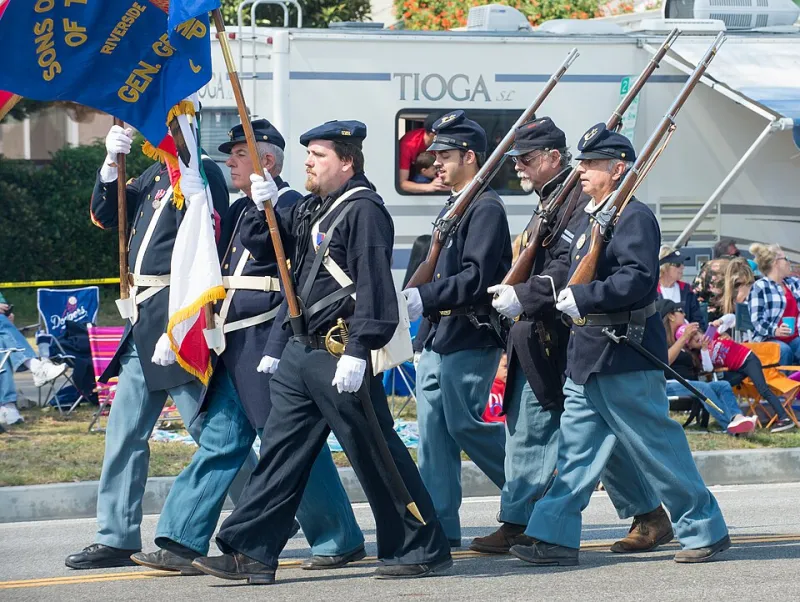
Photo: mark6mauno, CC BY 2.0, via Wikimedia Commons
The Civil War's Uniform Crisis That Gave Every American a Size
Stand in front of any clothing rack in America and you're surrounded by numbers and letters that feel self-evident: XS, S, M, L, XL. Size 32 waist. Size 8 dress. We treat these labels as a basic feature of the physical world, like inches or ounces. But they're not. They're an invention — a specific, historically contingent solution to a specific, historically urgent problem.
And that problem was: how do you clothe 700,000 men in a matter of months when you've never measured the American body before?
Before Sizes Existed
In the first half of the nineteenth century, Americans acquired clothing in one of three ways. Wealthy families hired tailors who measured each client individually and produced garments to fit. Working-class families often made clothes at home, cutting fabric to fit the bodies they knew by touch and habit. And a small but growing market of ready-made clothing existed — but it was rough, approximate, and largely aimed at sailors and laborers who needed something functional rather than flattering.
There was no industry standard for what a 'large' chest measurement meant. No agreed-upon relationship between height and sleeve length. No shared framework for translating a human body into a reproducible category. Each tailor had their own system; each manufacturer guessed differently. If you bought a coat off a shelf in 1855, you expected it to not quite fit. Alterations were assumed.
This was fine — or at least manageable — when clothing production was small-scale and local. It became a catastrophic problem the moment the country needed to dress an army.
The Quartermaster's Nightmare
When the Civil War began in April 1861, the Union Army faced a logistical challenge unlike anything American manufacturing had ever confronted. Within the first year of the war, the federal government needed to equip somewhere between 600,000 and 700,000 soldiers with uniforms, and that number would climb dramatically as the conflict dragged on.
The existing military supply system was built for a standing army of around 16,000 men. It was nowhere near capable of scaling to meet wartime demand. Factories that had been producing civilian clothing were hastily conscripted into uniform production, but they immediately ran into the same problem: without standard sizes, every order was essentially custom. That was impossibly slow.
The Quartermaster General's office, under the leadership of Montgomery Meigs — a meticulous and underappreciated logistical genius — pushed manufacturers to develop a solution. The answer they arrived at was radical in its simplicity: measure actual soldiers, systematically and at scale, and use those measurements to derive standard size categories that could be reproduced across different factories.
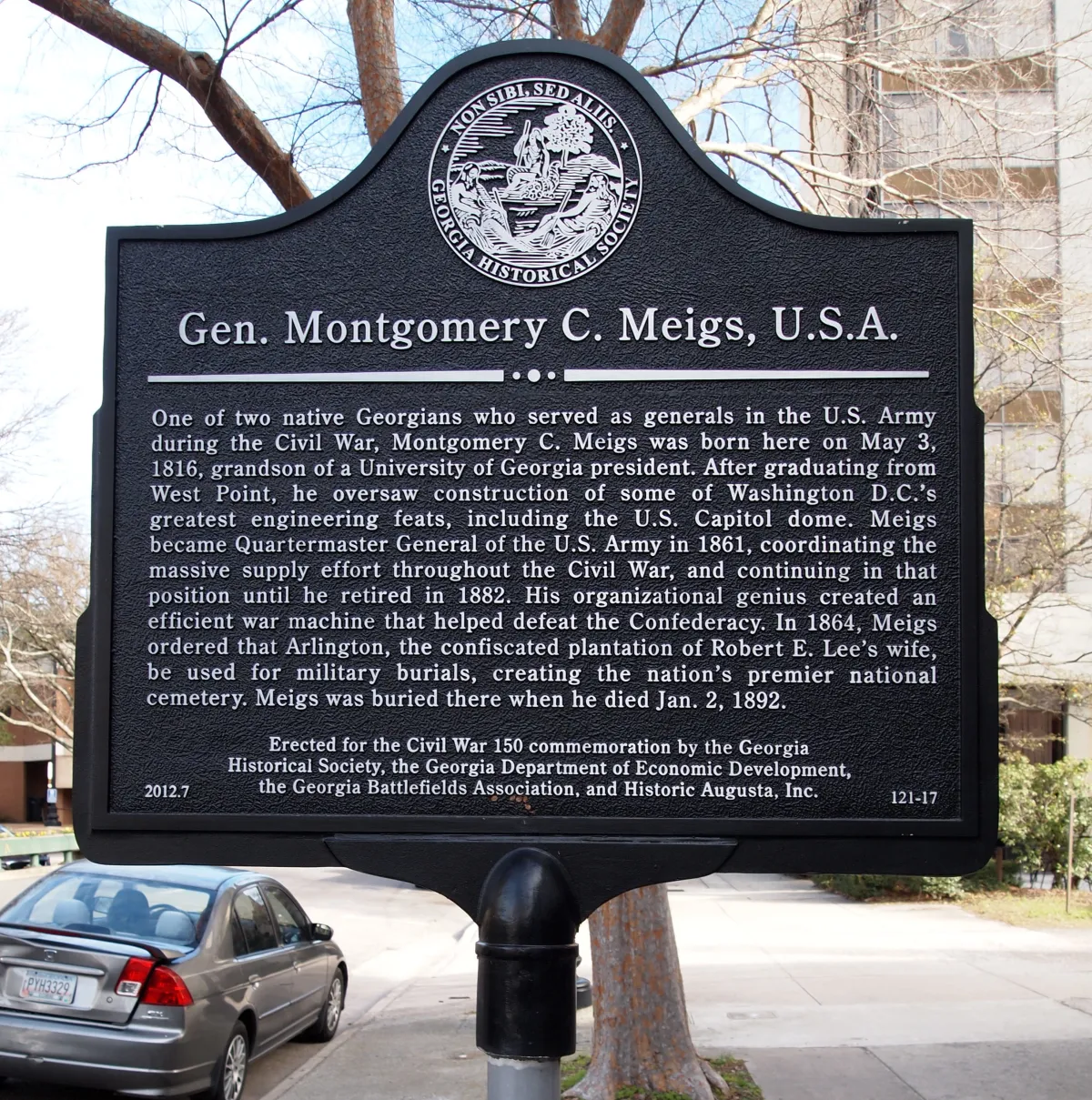 Photo: Montgomery Meigs, via georgiahistory.com
Army surgeons and recruiting officers began collecting body measurements from soldiers at induction — chest circumference, height, inseam, neck size. The data set that accumulated over the first years of the war was unprecedented. For the first time in American history, someone had a statistically meaningful picture of what the American male body actually looked like across different regions, occupations, and ethnic backgrounds.
Building the Body Chart
What manufacturers did with this data was both innovative and, by modern standards, deeply crude. They identified a handful of key measurements — primarily chest size — and built size categories around them, assuming that other dimensions (waist, sleeve, shoulder width) would correlate predictably. This assumption was imperfect from day one. Human bodies don't scale uniformly. A man with a 42-inch chest might have short arms or a long torso or narrow shoulders. The system averaged these variations away.
But it worked well enough. Uniform production accelerated dramatically once manufacturers could produce to standard specifications rather than guessing at individual fit. Factories in New York, Philadelphia, and Cincinnati were churning out tens of thousands of garments per week by 1862. The Union Army was clothed — imperfectly, but clothed — at a speed that would have been impossible under the old made-to-measure model.
After the war, the manufacturers who had built this system didn't dismantle it. They had invested in cutting templates, production processes, and inventory systems built around these size categories. When they turned back to civilian production, they brought the framework with them.
The Postwar Retail Revolution
The timing was fortunate — or rather, the timing was causal. The late 1860s and 1870s saw the rise of the American department store, with establishments like Macy's in New York and Marshall Field's in Chicago building vast floors of ready-to-wear merchandise. These stores needed clothing that could be produced at scale, displayed on racks, and sold without a tailor present.
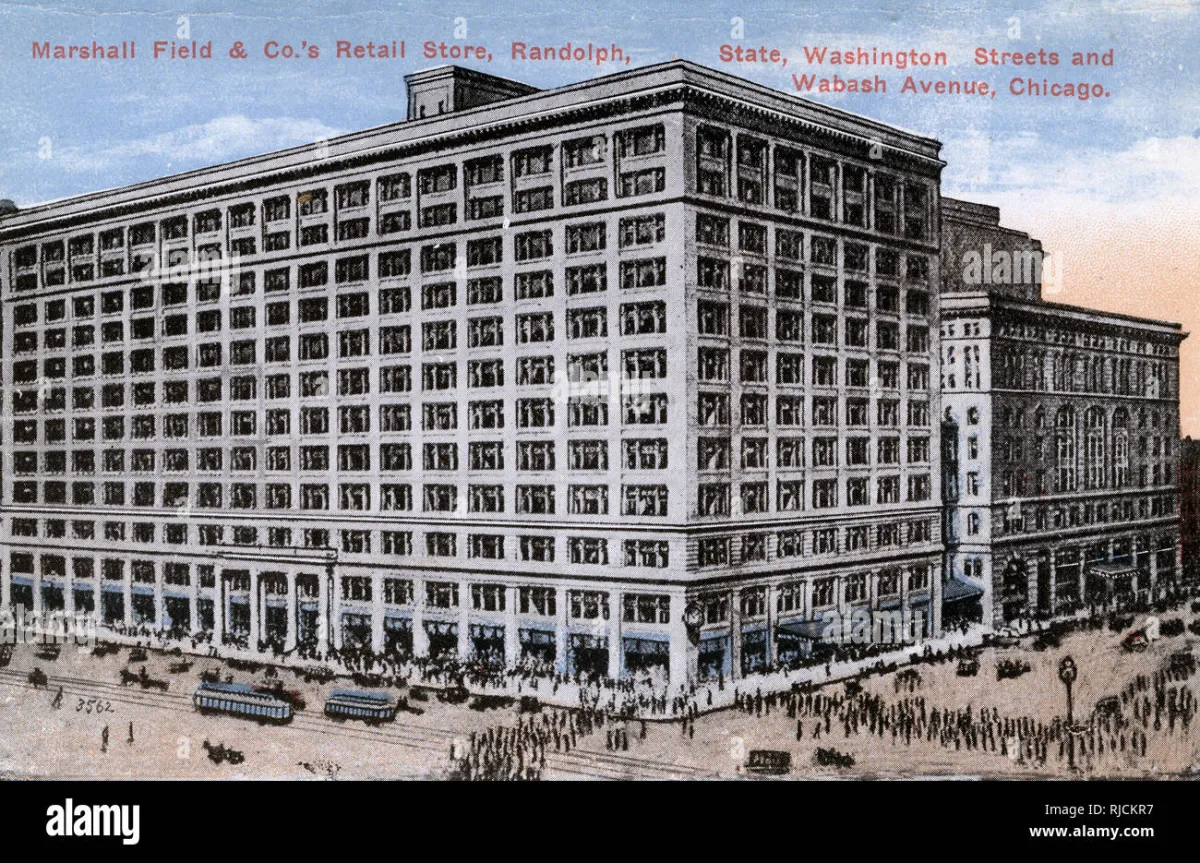 Photo: Marshall Field's, via c8.alamy.com
The wartime sizing system made this possible. Suddenly, a customer could walk into a store, say they were a size 38, and expect to find something that fit — roughly. The 'roughly' was doing a lot of work, and alterations remained a standard part of the purchase for decades. But the conceptual leap had been made: your body could be translated into a number, and that number could be matched to a product on a shelf.
Women's sizing followed a more chaotic path. The Civil War data had measured only male bodies, and when manufacturers tried to apply similar logic to women's clothing in the following decades, they did so without equivalent data collection. Women's sizes remained largely unstandardized well into the twentieth century — the federal government actually attempted a national measurement study in the 1940s, producing the famous '1958 Voluntary Product Standard' that proved almost immediately controversial and was widely ignored by manufacturers.
The result is the situation that persists today: men's sizing, for all its imperfections, is at least grounded in actual body measurements. Women's sizing is a floating, brand-specific fiction that varies wildly between retailers.
The Measurement That Still Doesn't Fit
Here's the uncomfortable truth at the center of this history: the system that was built in wartime urgency, using the bodies of Civil War soldiers as its data set, has never been fully updated to reflect how American bodies have changed in the 160 years since. Manufacturers have adjusted their actual cutting dimensions repeatedly — a phenomenon known as 'vanity sizing,' where a size 10 today would have been a size 14 in 1960 — but the underlying logic of the system remains essentially unchanged.
Every time you grab something off a rack and discover it fits weirdly across the shoulders, or that the same size fits completely differently at two different stores, you're bumping up against the limits of a system that was never designed for precision. It was designed for speed. It was designed to get hundreds of thousands of young men into uniform before the next battle.
It did that job remarkably well. Everything else — the retail revolution, the ready-to-wear industry, the entire architecture of modern clothing shopping — was an accident that grew from a wartime fix. The size on your tag is older than you think, and it was never really meant to fit you perfectly. It was meant to fit an army.