The Forgotten Patent That Drew the Blueprint for Suburban America
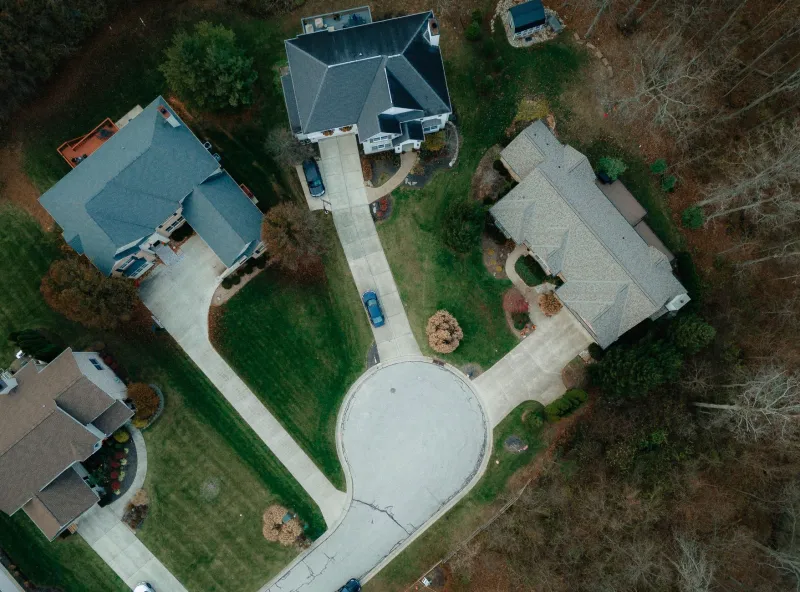
Every time you drive past a neighborhood where the houses look like they were stamped out by the same giant cookie cutter — same roofline, same front lawn, same brick-red mailbox — you're looking at the legacy of an idea that almost never made it off the page.
Most people credit William Levitt with inventing the modern American suburb. His Levittown developments in New York and Pennsylvania became the defining image of postwar American life: affordable homes, freshly poured concrete, and the promise of the middle class realized in vinyl siding. But Levitt didn't conjure that model from nowhere. He was, in many ways, the beneficiary of a forgotten inventor's rejected patent and a chain of bureaucratic accidents that no one planned and almost no one noticed.
The Patent Nobody Wanted
In the early 1900s, a small wave of inventors became obsessed with the same problem: construction was slow, expensive, and dependent on skilled labor that cost real money. One of the more persistent tinkerers in this space filed a series of patents for prefabricated wall panels — modular sections of a house that could be built in a factory, shipped flat, and assembled on-site like furniture.
The idea was elegant. The reception was not.
Banks refused to finance homes built with the panels, arguing that non-traditional construction methods made the properties impossible to appraise. Local building codes, written with conventional brick-and-mortar construction in mind, effectively blocked the panels from being used in most municipalities. And the federal government, which was just beginning to think seriously about housing policy, dismissed the concept as an unproven gimmick with no track record.
The inventor — whose name has largely been scrubbed from the popular history of housing — shelved the patent. The panels went nowhere.
The Government Accidentally Changes Everything
Fast forward to 1934. The country is deep in the Depression, millions of families are behind on their mortgages, and the Roosevelt administration is desperately searching for ways to stabilize the housing market. The answer they land on is the Federal Housing Administration, a new agency designed to insure home loans and convince skittish banks to lend again.
 Photo: Federal Housing Administration, via img.favpng.com
The FHA didn't set out to build suburbs. It set out to reduce risk. But the way it reduced risk had enormous consequences for how America would grow.
The agency developed a set of underwriting standards — guidelines for what kinds of homes and what kinds of neighborhoods qualified for insured loans. Almost by accident, those standards heavily favored new construction over old, single-family homes over apartments, and low-density neighborhoods over urban density. Row houses in cities? Risky. A freshly built three-bedroom on a quarter-acre lot outside the city? That was the FHA's sweet spot.
The agency also, crucially, began to accept homes built with newer construction techniques — including modular and prefabricated methods that bore a striking resemblance to those long-dismissed patents from decades earlier. The technology had matured. The government had caught up. And suddenly the financing was there.
Levitt's Assembly Line
William Levitt didn't invent prefabrication, but he understood it better than almost anyone. During World War II, he had built housing for Navy personnel using streamlined, repetitive construction techniques borrowed directly from the manufacturing world. When the war ended and sixteen million veterans came home looking for somewhere to put down roots, Levitt was ready.
He broke homebuilding into twenty-seven separate steps. Each step was assigned to a dedicated crew. No one crew did more than one task. It was Henry Ford's assembly line applied to a subdivision, and it worked with startling efficiency. Levitt could finish a house in under a day. He was building thirty houses a week at the peak of Levittown's construction.
The FHA insured the mortgages. Veterans used their GI Bill benefits to cover down payments. And families who had spent their entire lives renting suddenly found themselves holding a deed.
A Blueprint Nobody Drafted
Here's the part that rarely makes it into the history books: nobody sat down and decided that this was how American life should be organized. There was no master plan, no grand committee that looked at a map and said, "Let's put the families out here and the jobs in there."
The suburb happened because a rejected patent met a Depression-era lending policy met a postwar housing shortage met a builder who had learned efficiency from the military. Each piece arrived from a completely different direction. The result looked inevitable only in hindsight.
By 1950, more Americans lived in suburbs than in cities for the first time in the country's history. By 1960, the pattern was so entrenched that it had reshaped everything — the highway system, the car industry, the supermarket, the school district, the commute, the backyard barbecue.
What the Rejected Patent Actually Built
The inventor who filed those early prefabricated panel patents probably never imagined that his dismissed idea would eventually underpin the way tens of millions of Americans live. He was trying to solve a construction problem. He wasn't trying to redesign the social fabric of the country.
But that's how so much of American life actually got built — not through vision, but through the collision of small accidents, policy quirks, and practical desperation. The suburb wasn't a dream someone had. It was a solution that kept getting rejected until, one day, all the conditions were finally right and it snapped into place almost overnight.
Next time you pull into a neighborhood where every house looks vaguely familiar, that's not a coincidence. It's a paper trail — one that leads back through Levittown, through the FHA, through a wartime factory, all the way to a patent that nobody wanted.