One Bored Sportswriter, a Soggy Field, and the Statistic That Took Over America
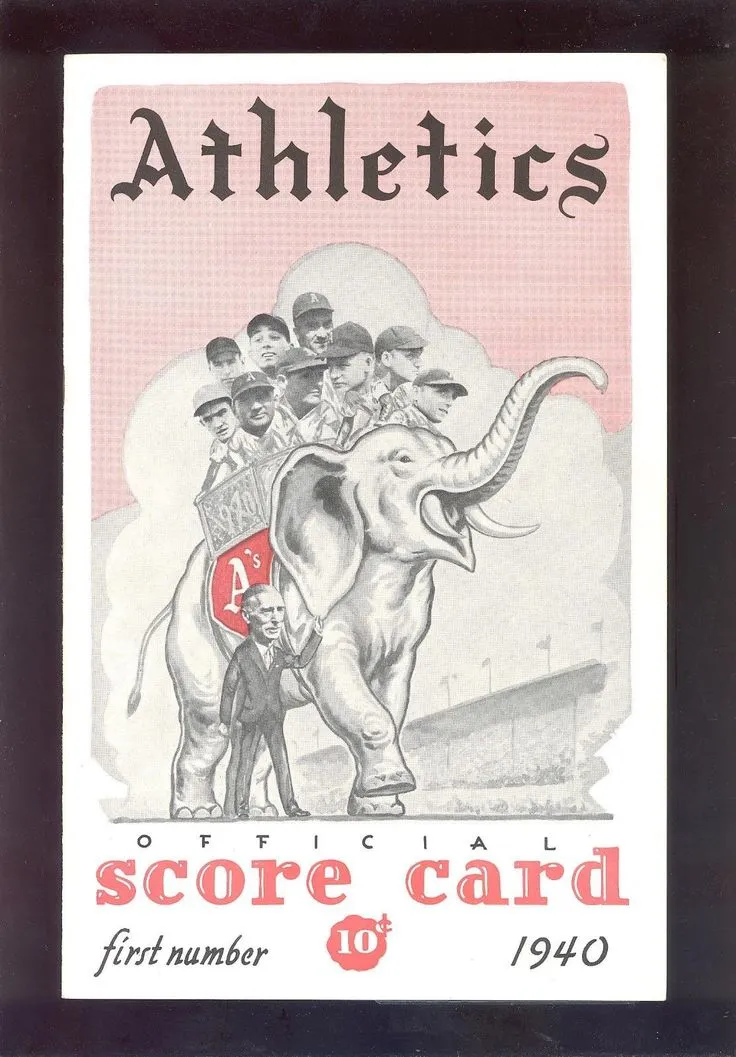
Photo: vintage baseball scorecard newspaper 1940s sports statistics journalism, via i.pinimg.com
There is no sport on earth more obsessed with numbers than baseball. A devoted fan can tell you a player's batting average, on-base percentage, slugging percentage, and wins above replacement without pausing to think. Entire careers have been built on the analysis of baseball data. The 2002 Oakland Athletics, famously chronicled in Moneyball, used statistical modeling to build a competitive roster on a shoestring budget and changed how professional sports organizations think about talent evaluation forever.
 Photo: Oakland Athletics, via wallpapers.com
All of that traces back — through a surprisingly short chain of events — to a journalist who was killing time during a rain delay in the 1840s and needed something to fill his column.
Before the Numbers
Early American baseball — or what passed for it in the 1840s, when the game was still being formalized by amateur clubs in New York — was covered in newspapers the way any other social event might be. Writers described the scene. They noted the weather, the crowd, the general mood. If a player made a particularly impressive play, they might mention it in passing. But there was no systematic effort to record what had actually happened on the field in any quantifiable way.
This wasn't unusual. American journalism in the 1840s wasn't built around data. It was built around narrative, opinion, and atmosphere. Numbers were for accountants and scientists, not sportswriters.
The man who changed that was Henry Chadwick, a British-born journalist who had grown up watching cricket and arrived in New York in time to witness the early growth of baseball as a popular pastime. Chadwick became genuinely fascinated by the game, but he brought with him a very specific frame of reference: cricket, a sport that had been keeping detailed written scorecards for generations.
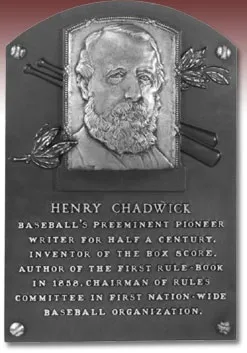 Photo: Henry Chadwick, via www.todayifoundout.com
The Cricket Connection
Cricket scorecards were sophisticated documents by the standards of the time. They tracked individual performance, recorded the sequence of play, and gave readers a precise account of what had happened in a match even if they hadn't been there to watch. For a sport that could last multiple days, a reliable written record wasn't just useful — it was essential.
Chadwick looked at baseball and saw the same potential. Here was a sport with discrete, countable events: hits, outs, runs, errors. Every at-bat had a result. Every inning had a structure. The game practically begged to be recorded systematically.
The story goes — and like many origin stories, this one has been smoothed by retelling — that Chadwick first developed his version of the baseball box score during a rain delay at a game he was covering in the late 1840s. With nothing happening on the field and a deadline still looming, he sketched out a grid that organized the game's events into rows and columns, borrowed loosely from the cricket scoring conventions he already knew.
When the game resumed and eventually ended, he had a complete statistical picture of what had happened. He published it. Readers loved it.
The Box Score Goes Mainstream
Chadwick spent the next several decades refining and evangelizing his creation. He developed many of the statistical categories that baseball fans still use today, including the concept of the batting average — a player's hits divided by their at-bats, expressed as a decimal. He advocated loudly and persistently for newspapers to adopt the box score format as standard practice.
By the time professional baseball arrived with the National League in 1876, the box score was already a fixture in American sports journalism. Fans expected it. Papers that didn't run it were considered incomplete. The number had become inseparable from the game itself.
 Photo: National League, via static.standard.co.uk
Chadwick, who eventually became known as the "Father of Baseball" — a title that obscures how much of his contribution was really about journalism and statistics rather than the sport itself — continued refining the statistical vocabulary of baseball well into the late 1800s. When he died in 1908, he had essentially created an entire analytical language that millions of Americans used without knowing where it came from.
From the Ballpark to Wall Street
Here's where the story gets interesting beyond the sport. The box score didn't just change how Americans watched baseball. It changed how Americans thought about measuring performance in general.
The habit of quantifying individual contribution — of reducing a person's output to a set of numbers that could be compared, ranked, and debated — was relatively new in American culture when Chadwick introduced it to sports. Baseball made that habit feel natural and even pleasurable. Arguing about batting averages was fun. Comparing statistics across seasons gave fans a way to engage with the sport during the off-season, when there were no games to watch.
That impulse spread. Fantasy sports — which are fundamentally an exercise in statistical analysis dressed up as competition — became a multi-billion-dollar industry in the late twentieth century, built entirely on the infrastructure of quantified athletic performance that Chadwick's box score made possible. The 2002 Moneyball revolution took the same logic and applied it to team-building, treating player evaluation as a data problem rather than a scouting instinct.
But the influence didn't stop at the stadium gates. Management consultants began borrowing performance-metric frameworks from sports analytics in the 1990s and 2000s. The idea that individual employee output could and should be measured, tracked, and compared against benchmarks — the annual performance review, the KPI dashboard, the quarterly target — owes a cultural debt to the same quantification instinct that Chadwick's box score normalized.
Wall Street had always loved numbers, but the specific habit of reducing complex human performance to a single comparable figure — a batting average for a trader, essentially — became more culturally intuitive as generations of Americans grew up treating sports statistics as a natural part of daily life.
The Rainy Afternoon That Kept Going
Chadwick borrowed an idea from cricket, applied it to baseball during a delay he hadn't planned for, and published it because he needed to fill space. That's the whole origin story. No grand vision, no scientific breakthrough, no moment of genius — just a practical journalist solving a practical problem with the tools he already had.
What he couldn't have known is that the tool he reached for would eventually shape how an entire culture thinks about performance, accountability, and the measurable value of human effort. The box score didn't just record baseball games. It taught America that everything worth doing is worth counting.
Somewhere in that soggy afternoon, a habit was born that never quite stopped spreading.