The Powder Room That Rewired America's Relationship With Public Space
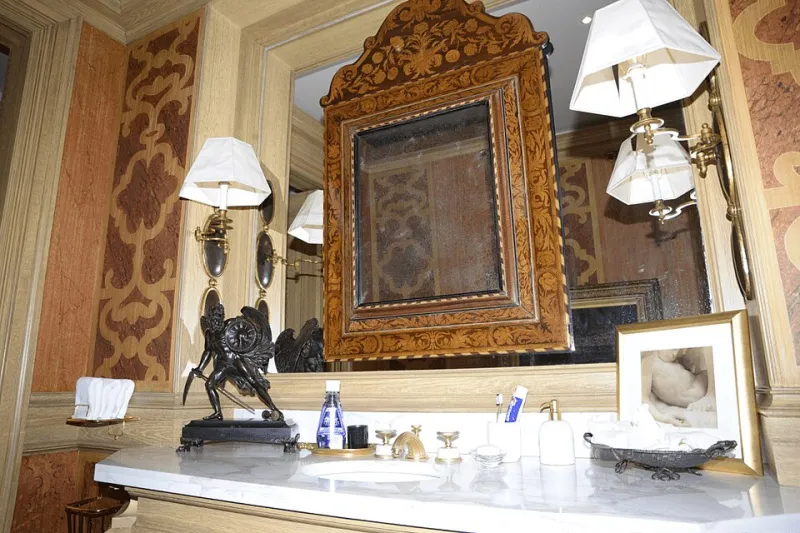
Photo: Federal Bureau of Investigation, Public domain, via Wikimedia Commons
A City With Nowhere to Go
If you were a woman shopping in downtown Chicago in 1910, you had a problem that nobody talked about in polite company. You could spend hours browsing stores, running errands, meeting friends — but if you needed a restroom, you were largely out of luck.
Public facilities, where they existed at all, were mostly built for men. Train stations had them tucked near the platforms. Saloons had them out back. Women were generally expected to conduct their business quickly and return home. The city, in its physical design, had not really accounted for them as people who stayed.
This was not just an inconvenience. It was a quiet but powerful constraint on how women could participate in public life. And it took a department store owner with a competitive streak and an eye for foot traffic to accidentally fix it.
Harry Gordon Selfridge's Chicago Rival
Most Americans know the Selfridge name from the British department store, or maybe the TV drama. But the transformation of American retail bathrooms owes more to a lesser-known figure: Marshall Field's, and the competitive pressure it created across Chicago's retail corridor in the early twentieth century.
Marshall Field had long understood something his competitors were slow to grasp — that women were the primary decision-makers in household spending, and that keeping them comfortable and lingering in the store translated directly to sales. The store had offered amenities like tea rooms and rest areas since the 1890s. But by 1914, a renovation of the flagship State Street store took that logic to a new level.
The ladies' restrooms installed during that renovation were, by contemporary accounts, genuinely remarkable. Marble countertops. Attendants. Upholstered seating areas adjacent to the facilities themselves. Separate spaces for freshening up, with mirrors and good lighting. The message was unmistakable: you are welcome here, and your comfort matters.
The response from shoppers was immediate and measurable. Women began treating the store not just as a place to buy things but as a destination — somewhere they could spend an entire afternoon without discomfort.
The Bathroom Arms Race
Once one store raised the standard, the rest had to follow or fall behind.
Within a few years, Wanamaker's in Philadelphia, Macy's in New York, and several regional department store chains had all invested significantly in their women's restroom facilities. The competition wasn't subtle — retailers actually advertised their bathroom quality in newspaper copy, listing features the way they might promote a sale. Clean. Spacious. Attended. Modern.
This was new. Before this moment, the public restroom had been understood as a utility — something you provided because you had to, kept functional because you must, and thought about as little as possible. The department stores turned it into a statement. A reflection of how seriously a business took its customers.
The implications reached well beyond retail. Hotels began upgrading their public facilities to compete for the same female traveler demographic. Restaurants that wanted to attract women's lunch crowds invested in cleaner, more presentable restrooms. Even train stations — notoriously grim in their facilities — faced increasing pressure from a public that had been shown what was possible.
Separate and (Supposedly) Equal
The department store bathroom revolution also cemented something that now feels completely natural but was actually a relatively recent standardization: the firm separation of men's and women's facilities.
In the mid-1800s, gender separation in public restrooms was inconsistent and often nonexistent in lower-end establishments. Some states had begun passing laws requiring separate facilities in factories and workplaces by the 1880s, but enforcement was uneven and the standards varied wildly.
The department stores, by designing elaborate, clearly gendered spaces and marketing them explicitly to women, helped normalize the two-door expectation in American public life. The "Ladies' Room" became not just a facility but a concept — a space designed with a specific user in mind, offering a specific kind of experience.
That framing has shaped American bathroom architecture, policy debates, and cultural expectations ever since. The ongoing conversations about gender-neutral facilities, accessibility standards, and what the public restroom should be are all, in some sense, downstream of the decision a Chicago retailer made to compete for women's shopping dollars.
The Federal Government Catches Up
By the mid-twentieth century, what had started as a competitive retail strategy had become codified in law. The Americans with Disabilities Act of 1990 set federal accessibility standards for public restrooms. OSHA had long established workplace restroom requirements. State and local building codes now specify everything from the ratio of stalls to square footage.
The expectation that a public restroom should be clean, accessible, and gender-designated is so deeply embedded in American life that it feels like it was always there. It wasn't. It was built, one renovation at a time, by retailers trying to outdo each other.
What a Bathroom Says About a Place
There's a reason travelers have always used the cleanliness of a restaurant's bathroom as a proxy for the cleanliness of its kitchen. The restroom became, sometime in the twentieth century, a signal. A declaration of how much a business respects the people inside it.
That instinct — that the quality of a bathroom reflects the quality of the place — was essentially invented by department stores competing for female shoppers in the 1910s.
The next time you walk into a well-maintained public restroom and think nothing of it, you're experiencing the long tail of a retail strategy that's over a hundred years old. Someone decided your comfort was worth investing in. It just took a while for everyone else to agree.