He Built a Filing System to Impress a Date. She Turned It Into a Billion-Dollar Wedding Tradition.
Photo: Unknown, Public domain, via Wikimedia Commons
The Most Elaborate First Impression in History
There is a long tradition of people doing slightly ridiculous things to impress someone they like. Flowers. Fancy dinners. Pretending to enjoy activities you've never tried before.
In 1954, a 29-year-old electrical engineer named Raymond Caulfield in Dayton, Ohio, took a different approach. He organized his ham radio equipment.
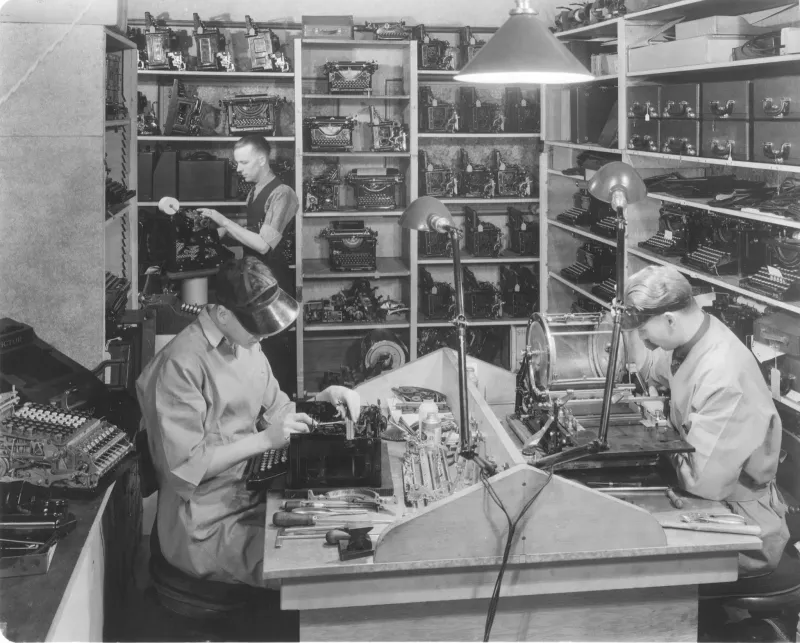
Not tidied it up. Organized it. Catalogued it. Built a complete indexed reference system for every component, spare part, frequency chart, and piece of surplus equipment in his home workshop — cross-referenced by type, manufacturer, and acquisition date, stored in a custom-built filing cabinet with hand-labeled tabs.
He'd been invited to show the workshop to a woman named Dorothy, who worked at the same defense contractor and had expressed polite curiosity about his hobby. He wanted to make an impression.
Dorothy was, by all accounts, genuinely impressed. Not just by the radio equipment — by the system.
The Woman Who Fixed the System
Raymond and Dorothy married in 1956. And Dorothy, who had a background in clerical administration and a sharp eye for organizational inefficiency, almost immediately identified a flaw in her husband's beloved catalog.
The system was built around what Raymond had. It didn't account for what he needed. There was no mechanism for tracking gaps, flagging items to acquire, or communicating to other hobbyists in his radio club what components he was looking for.
She redesigned it.
Dorothy's version added what she called a "wants index" — a running list of desired items, organized by priority and estimated cost, that Raymond could share with club members who might have spare parts to trade or sell. It was, in essence, a wish list. A formalized, shareable, indexed wish list.
Within the Dayton ham radio community, the format caught on. Other hobbyists started building their own wants indexes. Dorothy helped several of them set up their systems. She had a gift for it.
The Department Store Connection
Here's where the story takes its unexpected turn.
In 1958, Dorothy's sister was getting married. The family was scattered across several states, and coordinating gifts was a logistical headache — relatives were duplicating presents, buying things the couple didn't need, and generally operating in the dark.
Dorothy applied her wants-index logic to the problem. She sat down with her sister and brother-in-law-to-be and built them a formal list: items they needed for their new household, organized by category, with notes on size, color preference, and where each item could be purchased.
She brought the list to a local branch of a regional department store — Elder-Beerman, which operated across Ohio — and asked if they could hold it on file so family members could consult it before buying. The store manager, a practical man named Gerald Watt, agreed without much ceremony. It seemed like a sensible arrangement.
Watt mentioned the system to his district manager. The district manager mentioned it to the regional buyer. By 1960, Elder-Beerman had formalized the concept under the name "Bridal Preference List" and was actively promoting it to engaged couples.
A Retailer's Dream Hiding in Plain Sight
It's worth pausing to appreciate what the gift registry actually does for a store.
It converts the diffuse, unpredictable spending of wedding guests into directed, in-store purchases. It creates a concentrated event — a wedding — that drives dozens of separate transactions. It introduces new customers to the store (out-of-town relatives who might never have shopped there). And it gets the couple themselves to spend significant time in the store selecting items, which reliably leads to additional purchases beyond the registry itself.
Department stores in the early 1960s realized all of this very quickly. The bridal registry spread from regional chains to national retailers with remarkable speed. By the mid-1960s, Bloomingdale's, Neiman Marcus, and eventually Macy's had all launched formal registry programs.
The concept kept expanding. Baby registries followed in the 1980s. College move-in registries came with the rise of big-box retailers in the 1990s. Amazon launched its universal wish list in 2000, which was essentially Dorothy's wants index rebuilt for the internet age. Today, the global gift registry market is valued at several billion dollars annually.
What Raymond Never Knew He Started
Raymond Caulfield continued working in electrical engineering until his retirement in the late 1970s. He was, by all accounts, a dedicated ham radio operator his entire adult life. There is no evidence he ever connected his workshop filing system to the retail phenomenon his wife had inadvertently sparked.
Dorothy lived until 1991. A short profile in a Dayton community newsletter from 1983 — written to mark the local ham radio club's fiftieth anniversary — mentions her organizational contributions to the club's early trading network. The bridal registry is not mentioned at all.
That's often how these things go. The person who built the original system is long forgotten. The industry that grew from it is enormous and entirely unaware of its own origins.
The List That Never Ends
The modern gift registry is so woven into American wedding culture that it can be hard to imagine a time before it existed. Couples register. Guests consult the list. Gifts arrive, neatly chosen, duplicates avoided. It feels like a system that must have been designed deliberately, by someone with a business plan and a market strategy.
It wasn't. It was designed by a woman in Ohio who looked at her husband's filing cabinet and thought: this is clever, but it could be better.
She was right. It could be. And it was.