The Victorian Collar Stiffener That Ended Up Shipping Everything You Own

Photo: LYUHOI Tima LUNGP, CC0, via Wikimedia Commons
Look around wherever you are right now. Somewhere nearby, there's almost certainly a cardboard box. Maybe it's the Amazon delivery from yesterday that you haven't broken down yet. Maybe it's the cereal on top of the refrigerator, or the moving boxes stacked in the garage, or the packaging from the last thing you ordered online. Cardboard is so omnipresent that we've stopped seeing it.
But corrugated cardboard — the kind with the wavy layer sandwiched between two flat sheets — didn't start as a shipping material at all. It started as a fashion accessory. And it only became the universal container of American commerce because a world war forced manufacturers to abandon almost everything else.
It Began With a Hat Problem
In 1856, two Englishmen named Edward Charles Healey and Edward Ellis Allen filed a patent for a new type of material: paper crimped into a series of parallel ridges and used as a liner inside tall hats and stiff shirt collars. The corrugated structure gave it strength without adding weight, and it kept its shape under pressure. Hatters loved it. It was a small, practical solution to a small, practical problem.
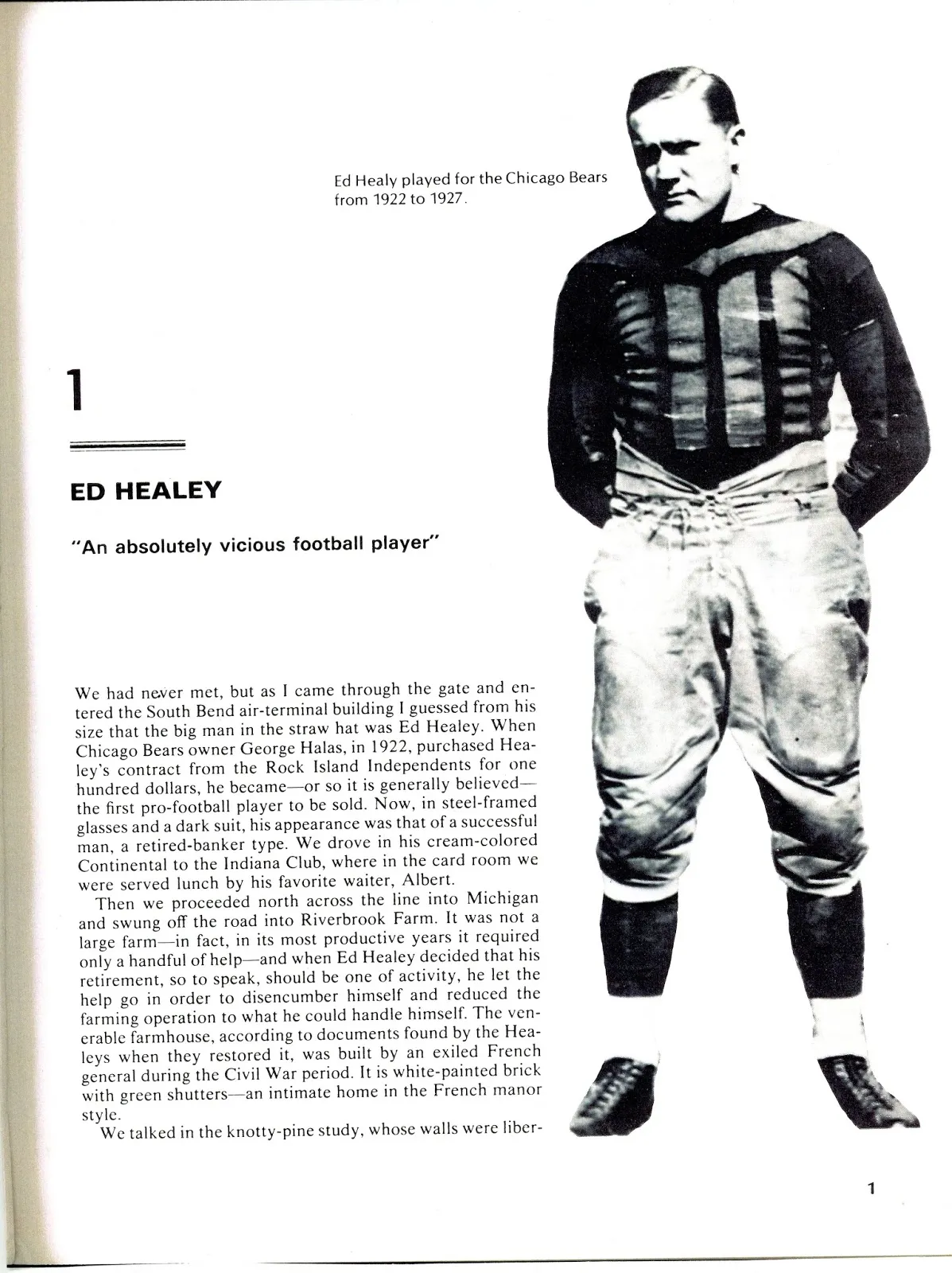 Photo: Edward Charles Healey, via blogger.googleusercontent.com
For the next decade and a half, that's all it was. Nobody thought to ask whether the same principle might work at a larger scale.
Then, in 1871, an American named Albert Jones took the idea one step further. Jones patented a version of corrugated paper designed not as a liner but as a wrapping material — specifically for protecting glass bottles and fragile objects during shipping. His design used a single corrugated sheet, without the flat backing layers that characterize the material we know today. It was flimsy by modern standards, but it was the first time someone had thought about corrugated paper as a container solution rather than a fashion fix.
The Sandwich That Changed Everything
The design that actually resembles modern corrugated cardboard came two years later. In 1874, Oliver Long improved on Jones's patent by adding flat liner sheets to both sides of the corrugated core — creating the characteristic sandwich structure that gives the material its strength. Suddenly you had something that could be stacked, folded, cut, and formed into boxes. You had a lightweight container that was stronger than it had any right to be.
 Photo: Oliver Long, via static.wixstatic.com
By the 1880s and 1890s, a handful of American manufacturers were experimenting with corrugated boxes as an alternative to wooden crates for shipping everything from crackers to shoes. The early adopters found that cardboard boxes were cheaper to produce, lighter to ship, and easier to print on. But they faced serious resistance.
The railroads, which controlled most freight shipping in America, had established rate structures based on wooden crate dimensions. They were slow to recognize cardboard as a legitimate shipping container. And traditional manufacturers, accustomed to the perceived sturdiness of wood, were skeptical that paper could protect their goods in transit.
The cardboard box spent the early 20th century as a promising but secondary option — useful for some products, impractical for others, never quite the default choice.
The War That Rewrote the Rules
World War II changed everything, and it changed it fast.
When the United States entered the war after Pearl Harbor in December 1941, the federal government moved quickly to ration and redirect industrial materials toward the war effort. Steel, aluminum, tin, and rubber were the headline shortages — but wood was quietly constrained too. Lumber was needed for military construction, crating for overseas shipments of ammunition and equipment, and a hundred other wartime applications. The wood that American manufacturers had been using for retail and commercial crating became harder to source, more expensive, and eventually subject to War Production Board restrictions.
Manufacturers didn't have the luxury of a gradual transition. They needed containers, and they needed them immediately. Corrugated cardboard, which could be produced from recycled paper pulp and required none of the rationed materials, was the obvious answer. Almost overnight, industries that had spent decades defaulting to wooden crates switched to cardboard boxes.
The transition was supposed to be temporary. It wasn't.
Why Nobody Switched Back
When the war ended in 1945, the material constraints disappeared. Wood was available again. Tin and steel came back. Manufacturers could theoretically have returned to their pre-war packaging habits.
Almost none of them did.
The wartime switch had forced a mass experiment, and the results were hard to argue with. Cardboard boxes were significantly cheaper than wooden crates. They were lighter, which reduced shipping costs. They could be printed on directly, which turned packaging into advertising. They could be manufactured in custom sizes and shapes, which reduced wasted space. And the infrastructure to produce them at scale — the mills, the converting plants, the printing operations — had all been rapidly expanded during the war years to meet demand.
Retailers discovered something else: cardboard boxes were better for the store floor. They were easier to open, easier to stack, and easier to dispose of than wooden crates, which required hammers and created splinter hazards. The consumer-facing packaging revolution of the postwar era — the rise of the supermarket, the branded cereal box, the six-pack — was built almost entirely on corrugated cardboard.
From the Store to Your Doorstep
Fast forward to 2023, and Americans receive roughly 50 billion corrugated cardboard boxes per year. The rise of e-commerce has pushed demand to levels that would have seemed incomprehensible to Oliver Long or Albert Jones. Amazon alone uses an estimated 600 million cardboard boxes annually in the United States.
The basic structure — corrugated core, flat liner sheets — hasn't changed in over 150 years. What changed was the context. A wartime emergency stripped away the inertia that had kept wooden crates in place, forced manufacturers to try something different, and locked in a preference that has never been reversed.
The Victorian gentleman who wore a corrugated paper liner in his hat collar had no idea he was contributing to the infrastructure of modern commerce. Neither did the War Production Board bureaucrats who restricted lumber in 1942. But somewhere between a hat shop in London and a World War II materials shortage, corrugated cardboard became the quiet backbone of American retail — and it's never going back.