When One Stubborn Grocer Forced America to Shop for Itself
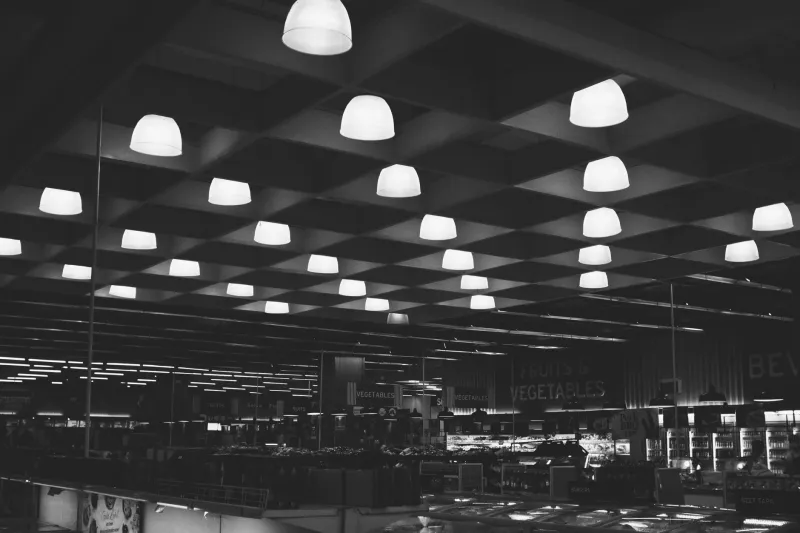
Walk into any American store today and you'll do something that would have seemed bizarre to your great-grandparents: you'll wander the aisles, grab what you want, and pay at the end. This ritual feels so natural that it's hard to imagine shopping any other way. But until 1916, American retail worked completely differently — and it took one frustrated Tennessee grocer to flip the script on an entire industry.
The World Before Self-Service
For centuries, shopping in America meant standing at a counter and asking a clerk to fetch everything for you. Walk into a general store in 1915, and you'd hand over a list. The shopkeeper would disappear into the back, gather your flour, sugar, and soap, then return to tally up your bill. You never touched the merchandise. You rarely even saw most of it.
This system worked fine when stores were small and labor was cheap. But by the early 1900s, American cities were booming, and store owners like Clarence Saunders were drowning in overhead costs. Every customer meant paying a clerk to hunt through inventory. Every transaction required personal service. For a penny-pinching businessman, it was maddening.
 Photo: Clarence Saunders, via thumbs.dreamstime.com
The Grocer Who Got Fed Up
Clarence Saunders wasn't trying to revolutionize retail when he opened his first Piggly Wiggly store in Memphis in 1916. He was trying to cut costs. Labor was expensive, customers were demanding, and the traditional counter-service model was eating into his profits. So Saunders did something that seemed insane: he laid out his merchandise on open shelves and forced customers to serve themselves.
 Photo: Piggly Wiggly, via www.calendarpedia.com
The concept was so foreign that Saunders had to patent it — Patent No. 1,242,872 for a "Self-Serving Store." The application described a maze-like layout with turnstiles at the entrance and a single checkout point at the exit. Customers would pick up a basket, wind through predetermined aisles, select their own goods, and pay on the way out. No clerks. No counter service. No human interaction until the very end.
Competitors thought he'd lost his mind. Who would want to do the work themselves? How would customers know what to buy without a knowledgeable clerk to guide them? Wouldn't people just steal everything?
The Accidental Psychology Experiment
Saunders had stumbled onto something he didn't expect: Americans actually liked shopping for themselves. The self-service model turned shopping from a chore into an experience. Customers could browse at their own pace, compare products side by side, and discover items they hadn't planned to buy. What Saunders designed to save money accidentally tapped into a deeper psychological shift in American consumer behavior.
The turnstiles and predetermined path weren't just cost-cutting measures — they were behavioral engineering. Customers had to walk past every section of the store, exposing them to impulse purchases. The shopping basket encouraged people to buy more than they'd originally planned. Without a clerk hovering over them, shoppers felt free to take their time and explore.
Within a year, Piggly Wiggly was profitable beyond Saunders' wildest dreams. By 1922, he had over 1,200 stores across the country. Other retailers, who had initially mocked the concept, scrambled to copy it.
From Grocery Stores to Everything Else
The self-service revolution didn't stop with groceries. Once Americans got comfortable picking out their own food, the concept spread to every corner of retail. Department stores adopted self-service sections. Gas stations let customers pump their own fuel. Even restaurants embraced the model with cafeterias and fast-food chains.
The psychological shift was profound. Self-service transformed Americans from passive consumers who relied on expert advice into active shoppers who trusted their own judgment. It democratized retail, making shopping faster and more accessible. But it also fundamentally changed the relationship between businesses and customers.
Stores no longer needed to employ armies of knowledgeable clerks. Instead, they could focus on marketing, product placement, and store design. The expertise shifted from human interaction to environmental psychology. Companies learned to sell through packaging, positioning, and atmosphere rather than personal service.
The Unintended Consequences
Saunders probably didn't realize he was dismantling a centuries-old economic model when he filed that patent in 1916. The counter-service system had created jobs for thousands of retail clerks, many of whom knew their customers personally and could offer genuine expertise about products. Self-service eliminated those jobs and replaced human knowledge with corporate marketing.
But it also made goods cheaper and more accessible. By cutting labor costs, self-service stores could offer lower prices and stay open longer hours. The model enabled the rise of suburban shopping centers, big-box retailers, and eventually online commerce. Every time you click "add to cart" on a website, you're participating in the same basic concept Saunders invented: serving yourself instead of asking someone else to do it for you.
The Grocer's Legacy
Clarence Saunders lost control of Piggly Wiggly in a stock market battle in 1923, but his invention outlived his business empire. The self-service model became so fundamental to American retail that we can't imagine shopping any other way. From Walmart to Amazon, every major retailer operates on the basic principle that customers will do the work themselves if you make it convenient enough.
Today, we're seeing the next evolution of Saunders' idea: self-checkout machines, mobile payments, and cashier-less stores. Each innovation pushes the self-service concept a little further, asking customers to take on more of the work that employees once did.
It all traces back to one frustrated grocer in Memphis who got tired of paying clerks and decided to make customers fend for themselves. Sometimes the biggest revolutions start with the smallest irritations.