How the Funeral Business Accidentally Taught America to Keep Things Cold
Somewhere between the butter dish and the leftover pasta sits one of the stranger artifacts of American commercial history. The refrigerator — that humming, taken-for-granted fixture of every kitchen in the country — has a backstory that most people would never guess. It doesn't start with food. It doesn't start with convenience. It starts, somewhat uncomfortably, with death.
More specifically, it starts with the problem of what to do with a body when the weather is warm and the burial can't happen immediately.
The Problem Nobody Liked to Talk About
Before embalming became standard practice in the United States, the interval between death and burial was a logistical nightmare, particularly in summer. Decomposition doesn't wait for funeral arrangements, and in the 19th century, families and undertakers were working against a hard biological clock. The solution, for most of the 1800s, was ice.
Packed around or beneath a body, ice could slow decomposition significantly — buying the days needed to notify distant relatives, arrange transport, or simply allow grieving families time to prepare. It wasn't elegant, but it worked. And because it worked reliably, funeral parlors became some of the earliest and most consistent commercial customers of the American ice trade.
That trade itself had been built almost entirely on the ambition of one Boston merchant named Frederic Tudor, who spent the early 19th century convincing a skeptical world that harvesting ice from New England lakes and shipping it south — to Charleston, to New Orleans, eventually to Calcutta — was a viable business. Tudor nearly went bankrupt multiple times making his case. But by the 1830s and 1840s, he had established the commercial and logistical framework that would define the ice trade for the next half century.
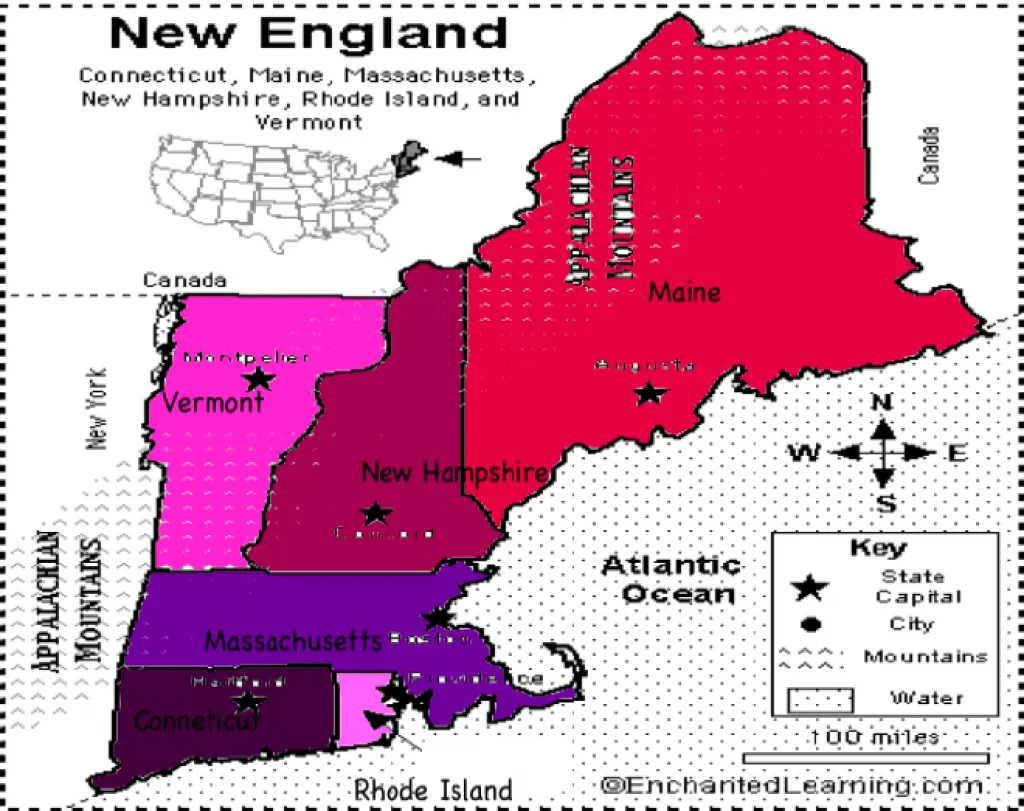 Photo: New England, via i2.wp.com
 Photo: Frederic Tudor, via c8.alamy.com
Funeral parlors didn't create that framework, but they reinforced it. They were steady customers in every season, not just summer. They paid reliably. And because they were operating in every American city and town, they helped maintain the distribution networks that made ice commercially viable on a wide scale.
The Civil War Changed Everything
If the funeral industry was an early anchor customer for the ice trade, the Civil War turbocharged the relationship in ways nobody anticipated.
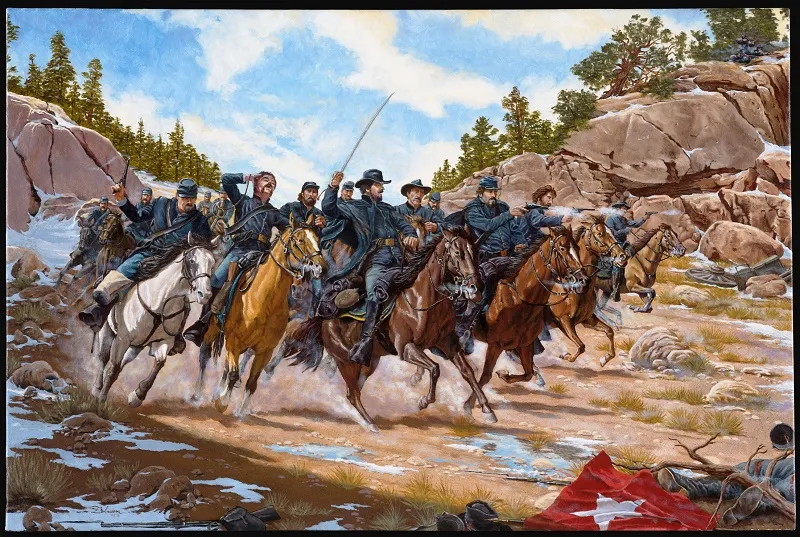 Photo: Civil War, via www.toptenz.net
The scale of death during the war — and the distances over which bodies needed to be transported home for burial — created an urgent, large-scale demand for preservation. Embalming, which had existed as a marginal practice before the war, expanded rapidly as a result. But ice remained essential, particularly in the field and in the early stages of preservation before embalming could be performed.
The war also did something culturally significant: it began to normalize the idea that the dead deserved careful, deliberate preservation. Before the Civil War, most Americans died at home and were buried quickly and locally. The war created a new expectation — that a body could and should be transported, preserved, and presented for a formal funeral. That expectation required cold. And cold required ice.
By the time the war ended in 1865, the commercial ice industry had grown substantially, and the funeral trade had helped drive that growth. The infrastructure — the icehouses, the delivery routes, the cutting crews on frozen lakes — was now firmly established across the country.
From the Parlor to the Kitchen
Here's where the traceback gets genuinely interesting.
The same delivery networks that kept funeral parlors stocked with ice were also serving hotels, restaurants, and — increasingly — private homes. As the 19th century progressed and the ice trade matured, domestic iceboxes became more common in middle-class American households. Families could order ice deliveries on a regular schedule, storing it in insulated wooden cabinets to keep food fresh.
The icebox wasn't a revolutionary leap. It was a gradual cultural shift — one in which Americans slowly came to expect cold storage as a normal part of domestic life rather than a luxury. And that shift was only possible because the commercial ice infrastructure already existed, already had delivery routes, already had customers.
Funeral parlors hadn't built that infrastructure alone, but they had been among its most consistent early supporters. Their steady, year-round demand helped keep ice businesses solvent during the years when domestic customers were still sporadic. In a very real sense, the economics of death helped subsidize the development of a cold-chain infrastructure that would eventually reach every American kitchen.
When the Ice Man Stopped Coming
By the early 20th century, mechanical refrigeration was beginning to threaten the natural ice trade. Electric refrigerators appeared in the 1910s, remained expensive and unreliable through the 1920s, and then dropped dramatically in price during the 1930s as manufacturing scaled up. By the end of World War II, the electric refrigerator had become a standard feature of the American home.
The funeral industry moved on too. Embalming had become the dominant preservation method by the late 19th century, reducing the industry's reliance on ice. Modern funeral homes eventually adopted their own refrigeration technology, purpose-built for preservation rather than borrowed from the food trade.
But the cultural expectation that cold storage was a domestic necessity — that expectation had been built, brick by brick, on a foundation that included the macabre but entirely practical needs of the funeral business.
What's Actually in Your Kitchen
Pull open your refrigerator door and you're looking at the end of a very long chain of cause and effect. Frederic Tudor's frozen lake gamble. The Civil War's grim preservation demands. The funeral parlors that kept ice delivery routes economically viable through the back half of the 19th century. The icebox manufacturers who slowly convinced American households that cold storage was a right rather than a luxury.
None of those people were trying to build what eventually became the modern kitchen appliance industry. They were trying to solve much more immediate, much more uncomfortable problems.
The refrigerator is, in the most literal sense, a product of the death industry's practical needs. It just took about a century for anyone to notice.