How Victorian Undertakers Convinced America That Grief Required a Purchase
When Funerals Were Just Funerals
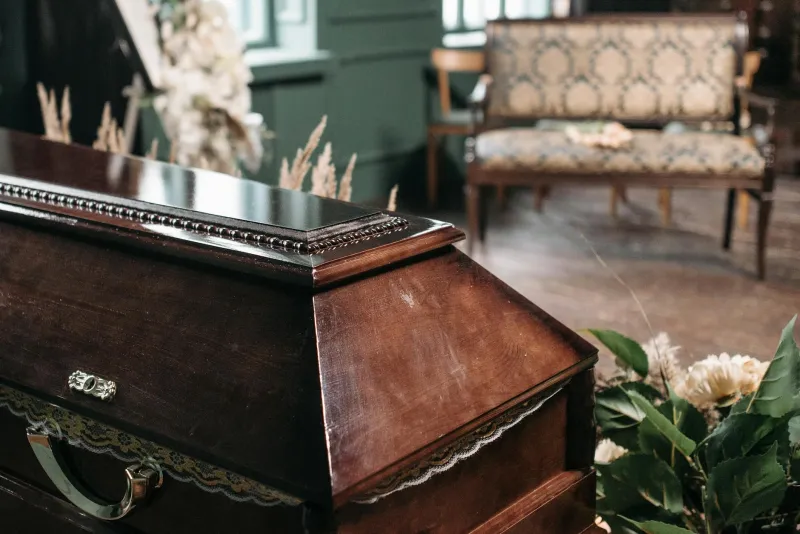
Walk into any American funeral home today, and you'll be surrounded by flowers. Elaborate arrangements, modest bouquets, standing sprays—the floral displays seem as natural and necessary as the casket itself. But this wasn't always the case.
 Photo: Victorian era funeral, via www.mundoprimaria.com
Before 1860, the typical American funeral was a stark, simple affair. Families gathered, said their goodbyes, and buried their dead without a single flower in sight. The idea of sending floral arrangements to express sympathy was not just uncommon—it was virtually unknown.
That changed thanks to one of the most successful marketing campaigns in American history, orchestrated by two industries that discovered they could profit from grief.
The Civil War Changes Everything
The Civil War created America's first mass death experience. Suddenly, families across the country were losing sons, fathers, and brothers far from home. Traditional funeral customs—intimate family gatherings around a body prepared at home—became impossible when loved ones died hundreds of miles away.
 Photo: Civil War, via c8.alamy.com
Professional undertakers stepped in to fill this void. They offered services that grieving families had never needed before: embalming to preserve bodies for long journeys home, elaborate caskets, and formal funeral parlors. Death, which had always been a family affair, was becoming a business.
But undertakers faced a problem. How do you convince families to spend money on services they'd never thought they needed?
The Florist-Funeral Home Alliance
Sometime in the 1870s, undertakers and florists in major cities began an informal partnership that would reshape American mourning forever. The strategy was elegant in its simplicity: make bare funeral services look inadequate.
Florists began offering "funeral arrangements" at discounted rates to funeral homes. Undertakers would display these flowers prominently during services, creating an atmosphere of beauty and reverence that made undecorated ceremonies feel cold and insufficient by comparison.
Trade publications for both industries began promoting the partnership. "The American Funeral Director" ran articles with titles like "The Proper Floral Tribute" and "How Flowers Honor the Departed." Florist magazines published guides for "appropriate mourning arrangements."
Manufacturing Tradition Through Shame
The campaign's genius lay in how it weaponized Victorian social anxiety. The late 1800s were obsessed with propriety and doing things "correctly." Funeral directors and florists positioned flowers not as an option, but as a requirement of proper mourning.
Newspaper advertisements began appearing with subtle but powerful messaging. "Show your respect with appropriate floral tributes." "A bare service honors no one." "Let flowers speak when words cannot."
The psychological pressure was enormous. No one wanted to appear cheap or uncaring at a loved one's funeral. Flowers became a way to publicly demonstrate the depth of your grief and the quality of your character.
The Guilt Economy Takes Root
By 1900, the transformation was complete. What had been optional for decades was now essential. Funeral homes standardized floral displays as part of their basic service packages. Florists developed specialized "sympathy" sections with arrangements designed specifically for mourning.
The financial impact was immediate. Families who might have spent $50 on a simple funeral now felt obligated to spend $150 or more to include "appropriate" floral tributes. The added cost wasn't just for flowers—it was for social acceptance.
More importantly, the success of the flowers campaign proved that grief could be commercialized. Funeral directors began adding other "essential" services: professional mourning photography, elaborate guest books, specialized funeral stationery. Each addition was positioned not as a luxury, but as a basic requirement of proper mourning.
Building the Sympathy Industrial Complex
The floral funeral campaign established templates that other industries quickly adopted. Greeting card companies began promoting "sympathy cards" as necessary expressions of condolence. Jewelry makers pushed "mourning jewelry." Clothing retailers developed entire "mourning wear" departments.
Each industry used the same psychological strategy: position their product not as a purchase, but as a social obligation. Failing to buy became a form of social failure.
By the 1920s, the average American funeral cost had increased by over 300% from pre-Civil War levels, with flowers representing the largest single addition to traditional funeral expenses.
The Modern Flower Guilt Machine
Today's sympathy flower industry generates over $13 billion annually. The average American funeral features $400-800 worth of floral arrangements, often purchased by people who can barely afford them but feel they have no choice.
The guilt mechanism established in the 1870s remains remarkably intact. Walk into any funeral home, and you'll still see the same psychological pressure: elaborate floral displays that make anything less seem inadequate. Online sympathy flower retailers use language virtually identical to Victorian-era advertisements: "Honor their memory," "Show you care," "Express what words cannot."
The Forgotten Truth About American Grief
Perhaps most remarkably, the flower funeral campaign was so successful that most Americans today assume sending flowers has always been part of mourning tradition. The idea that funerals were once simple, flower-free affairs seems almost unthinkable.
This historical amnesia is the campaign's greatest victory. When a marketing strategy becomes so deeply embedded in culture that people forget it was ever marketing at all, it has achieved something close to permanence.
The next time you feel obligated to send flowers to a funeral, remember: that obligation isn't rooted in ancient tradition or natural human instinct. It's the product of a deliberate campaign by businesses that discovered they could turn grief into profit—and convinced Americans that purchasing was just another word for caring.