The Anxious Inventor Who Couldn't Wait for Banking Hours
The Anxious Inventor Who Couldn't Wait for Banking Hours
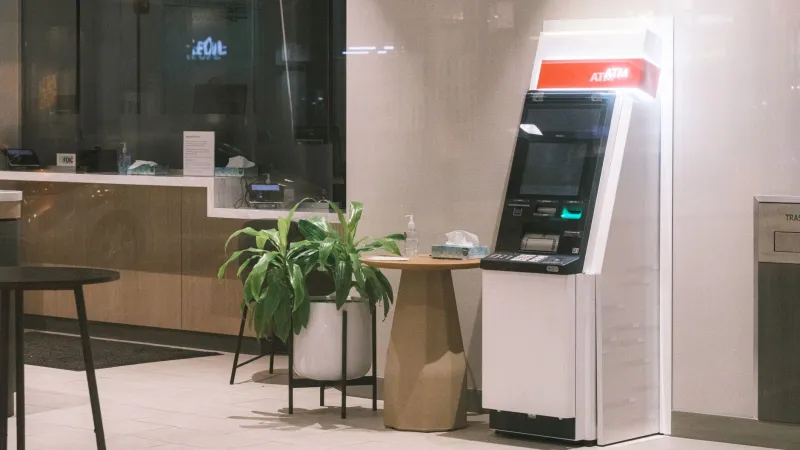
Every time you slide your card into an ATM, you're using a machine that exists because one man in London couldn't handle the anxiety of being locked out of his bank on a weekend. The automated teller machine — now as common as streetlights in American cities — was born from a moment of pure frustration in 1967, then spent the next decade fighting for acceptance in a banking industry that was convinced customers would never trust a machine with their money.
The Saturday That Changed Everything
John Shepherd-Barron was having a perfectly ordinary Saturday in London when he realized he needed cash. This was 1967, long before debit cards or mobile payments, when running out of money on the weekend meant you were stuck until Monday morning. Shepherd-Barron rushed to his local Barclays branch, but arrived just as the doors locked at noon.
Standing outside the bank, watching other frustrated customers discover the same problem, Shepherd-Barron had what he later called his "chocolate bar moment." If vending machines could dispense candy bars 24 hours a day, why couldn't banks dispense cash the same way?
The idea wasn't entirely original — several inventors had been tinkering with automated banking concepts since the 1950s. But Shepherd-Barron's frustration gave him the motivation to actually build one. He sketched out his concept that weekend: a machine that would accept a special voucher, verify the customer's identity with a PIN, and dispense predetermined amounts of cash.
The Pitch That Almost Failed
On Monday morning, Shepherd-Barron called Barclays and somehow convinced them to give him a meeting. His pitch was simple: install a machine that could handle basic banking transactions outside normal business hours. Customers would use special vouchers impregnated with radioactive carbon-14 (this was 1967, remember) that the machine could read and verify.
Barclays was intrigued enough to fund a prototype, but the concept faced immediate skepticism. Bank executives worried about security, reliability, and customer acceptance. Would people really trust a machine with their money? What if it broke down and ate someone's card? What if criminals figured out how to rob it?
Despite these concerns, Barclays installed the world's first ATM outside their Enfield branch on June 27, 1967. The machine was essentially a computerized safe with a cash dispenser attached. Customers inserted their carbon-14 vouchers, entered a four-digit PIN, and received a maximum of £10 (about $25 at the time). The first transaction was made by actor Reg Varney, who withdrew £10 for the cameras and accidentally became the first person to use an ATM.
America's Reluctant Adoption
Word of Barclays' experiment quickly reached American banks, where it was met with a mixture of curiosity and skepticism. The technology seemed promising, but American banking culture was different from Britain's. American banks prided themselves on personal service and customer relationships. The idea of replacing human tellers with machines felt like a step backward.
Chemical Bank in Rockville Centre, New York, became the first American bank to install an ATM in 1969. They called it a "Docuteller" and marketed it as a convenience for customers who couldn't make it to the bank during normal hours. But adoption was painfully slow. Customers didn't trust the machines, and banks weren't sure how to make them profitable.
 Photo: Chemical Bank, via www.nnmagazine.cz
The early American ATMs were clunky, unreliable, and limited. They could only dispense cash in predetermined amounts, usually $20 or $40. They frequently broke down, sometimes keeping customers' cards for days. And they were expensive to install and maintain, requiring dedicated phone lines and regular cash refills.
The Security Theater Problem
American banks spent the early 1970s trying to solve what they saw as the ATM's fundamental problem: customers didn't feel safe using them. Unlike human tellers, who could recognize regular customers and spot suspicious behavior, ATMs were anonymous and vulnerable. Banks worried about fraud, theft, and customer liability.
The industry's solution was to surround ATMs with elaborate security theater. Early machines were installed in special booths with bulletproof glass and emergency phones. Banks hired security guards to patrol ATM locations. Some institutions required customers to show identification to a guard before using the machine, defeating the entire purpose of automated banking.
These security measures actually made ATMs less convenient than human tellers, not more. Customers had to plan ahead, carry special cards, and navigate complex procedures just to withdraw their own money. Many people simply gave up and went back to traditional banking.
The Breakthrough Nobody Saw Coming
The ATM's breakthrough came from an unexpected source: the 1973 oil crisis. As gas prices soared and economic uncertainty spread, American banks faced pressure to cut costs and extend service hours. Suddenly, the economics of ATMs made sense. One machine could handle hundreds of transactions per day, far more than a human teller working the same hours.
Banks began installing ATMs not as customer conveniences, but as cost-cutting measures. They could reduce staffing, extend hours without paying overtime, and handle routine transactions automatically. The marketing shifted from "convenient banking" to "24-hour service," emphasizing accessibility over automation.
Customers gradually warmed to the machines as they became more reliable and widespread. The introduction of magnetic stripe cards in the mid-1970s made transactions faster and more secure. Banks formed networks that allowed customers to use ATMs at multiple institutions, increasing convenience and utility.
The Disputed Legacy
Here's where the story gets complicated: John Shepherd-Barron isn't the only person credited with inventing the ATM. Luther George Simjian filed patents for automated banking machines in the 1930s and 1960s. Donald Wetzel and his team at Docutel developed the technology used in America's first ATMs. James Goodfellow invented the PIN system that made ATMs secure.
The truth is that the ATM, like many transformative technologies, emerged from multiple innovations happening simultaneously. Shepherd-Barron's contribution was recognizing the need and pushing for implementation, but the technology required contributions from dozens of engineers, designers, and entrepreneurs.
This collaborative development explains why ATM adoption was so gradual. No single company or inventor controlled the technology, so improvements came in fits and starts. American banks spent years perfecting systems that British banks had already figured out, while British banks struggled with problems that American engineers had already solved.
The Machine That Changed Everything
By 1980, ATMs had become indispensable to American banking. The machines that banks had initially resisted were now competitive necessities. Customers expected 24-hour access to their money, and banks that couldn't provide it lost business to those that could.
The psychological shift was profound. Americans learned to trust machines with financial transactions, paving the way for credit card networks, online banking, and eventually mobile payments. The ATM didn't just change how people accessed their money — it changed how they thought about money itself.
Today, there are over 400,000 ATMs in the United States, processing billions of transactions annually. The anxious inventor who couldn't wait for banking hours accidentally created one of the most important interfaces between Americans and their money. Sometimes the most transformative technologies start with the most mundane frustrations: being locked out of your bank on a Saturday afternoon.