The Cheese Mountain That Built McDonald's
The Problem Nobody Saw Coming
By 1953, America had a cheese emergency. Not a shortage — the opposite. Federal dairy price supports designed to help farmers had worked too well, creating mountains of surplus cheese that nobody wanted to buy.
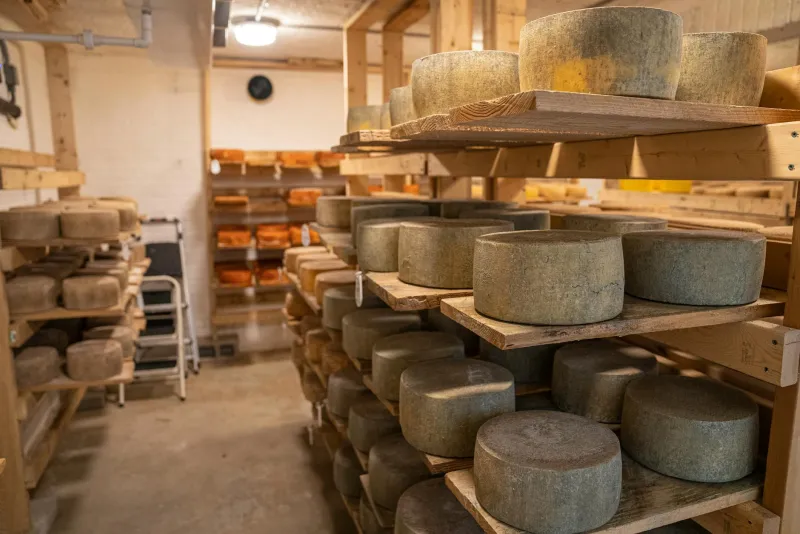
The government owned over 300 million pounds of processed cheese, stored in warehouses across the Midwest. It was shelf-stable, uniform, and completely unwanted by American consumers who preferred fresh varieties. The federal cheese program was hemorrhaging money, and politicians were getting nervous.
Then someone in the Agriculture Department had a radical idea: if Americans wouldn't buy government cheese at normal prices, what if they practically gave it away?
The Fire Sale That Changed Everything
In 1954, the federal government began selling processed cheese to food manufacturers at prices so low they bordered on absurd. A pound of American cheese that cost restaurants 60 cents could be purchased by food companies for 12 cents — if they bought in massive quantities.
Food manufacturers jumped at the deal. Suddenly, processed cheese became the cheapest protein available in America. But there was a catch: you had to use a lot of it to qualify for the bulk pricing.
"The government essentially created an economic incentive to put cheese on everything," explains food industry analyst Rebecca Torres. "If you were running a restaurant chain in 1955, cheese wasn't just cheap — it was practically free money."
The Golden Arches Discovery
Ray Kroc was among the first to understand what this meant. As he developed the McDonald's franchise system in the mid-1950s, Kroc realized that government-subsidized cheese could transform his economics. A hamburger that cost 28 cents to make could become a cheeseburger for just 30 cents — but sell for 40 cents.
 Photo: Ray Kroc, via www.reiskoe.nl
The math was irresistible. Cheese didn't just add flavor; it added pure profit margin.
Other chains followed McDonald's lead. Burger King, White Castle, and dozens of regional competitors began building their menus around cheap processed cheese. The cheeseburger went from regional novelty to national standard almost overnight.
"What people don't realize is that the American cheeseburger wasn't created by consumer demand," notes food historian Michael Rodriguez. "It was created by federal agricultural policy."
The Flavor That Conquered the World
The abundance of cheap processed cheese didn't just change burgers — it rewrote American taste preferences. Pizza chains discovered they could load pies with cheese and still maintain healthy margins. Tex-Mex restaurants built nachos into a cornerstone menu item. Even upscale establishments began incorporating processed cheese into sauces and side dishes.
American cheese became so ubiquitous that an entire generation grew up thinking its mild, creamy flavor was what cheese was supposed to taste like. When these Americans traveled abroad or tried imported varieties, they often found "real" cheese too sharp or complex.
The government surplus had accidentally created a national palate.
The Export Nobody Planned
As American fast food chains expanded internationally in the 1960s and 70s, they took their cheese-heavy menus with them. McDonald's cheeseburgers, Pizza Hut's cheese-loaded pies, and Taco Bell's nacho platters introduced processed American cheese to countries that had never seen anything like it.
The results were mixed. Europeans were mystified by cheese that didn't mold. Asians struggled with dairy-heavy dishes their cuisine had never featured. But in many developing countries, American-style processed cheese became a symbol of prosperity and modernity.
"We accidentally exported our agricultural surplus as culture," explains trade historian Jennifer Walsh. "Countries that adopted American fast food didn't just get our restaurants — they got our government's solution to overproduction."
The Legacy in Every Bite
Today, Americans consume over 30 pounds of cheese per person annually — more than any other country except France. Most of it is processed varieties that trace their dominance back to those 1950s government warehouses.
The federal dairy program that created the surplus still exists, though it's been reformed multiple times. But its unintended consequences live on in every fast food menu, every nacho platter, and every kid's grilled cheese sandwich.
Next time you bite into a cheeseburger, remember: you're not just tasting beef and dairy. You're tasting the solution to a bureaucratic problem from 70 years ago — the government cheese that quietly conquered American cuisine and never left.