The Awkward Dinner That Rewired American Spending Forever
The Most Expensive Dinner Check in History
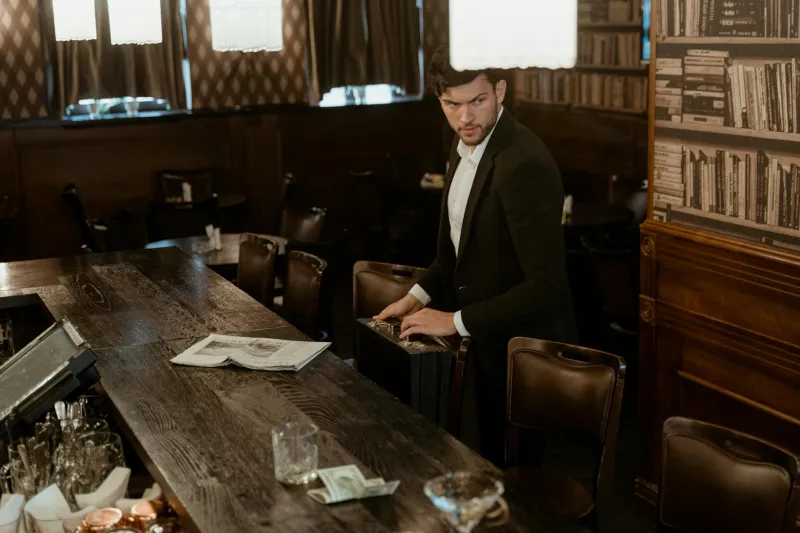
Frank McNamara was having what should have been a routine business dinner at Major's Cabin Grill in Manhattan when disaster struck. The successful businessman reached for his wallet to pay the check—and found nothing. He'd left it at home. The embarrassment of having to call his wife to bring money to cover a simple dinner tab would haunt McNamara for weeks.
 Photo: Major's Cabin Grill, via image.isu.pub
 Photo: Frank McNamara, via futboldeprimera.com.co
But that humiliation in February 1949 would accidentally birth an industry worth over a trillion dollars today.
When Cash Was King and Credit Was Sketchy
In post-war America, carrying cash was simply how business worked. Credit existed, but it was messy—individual stores offered their own charge accounts, oil companies had their gas cards, and banks offered loans for major purchases. But the idea of a universal payment method that worked everywhere? That was pure fantasy.
Most Americans viewed debt with suspicion anyway. The Depression had taught an entire generation to be wary of owing money to anyone. "Neither a borrower nor a lender be" wasn't just Shakespeare—it was practical wisdom that kept families fed.
The Cardboard Revolution Begins
McNamara couldn't shake his restaurant embarrassment. He kept thinking: what if there was a way to pay without cash that worked at any establishment? Not store credit, not a loan—something entirely different.
Working with his lawyer Ralph Schneider and a handful of Manhattan restaurants, McNamara launched the Diners Club in early 1950. The first "credit cards" were actually made of cardboard—flimsy little rectangles that looked more like business cards than financial instruments.
The concept was revolutionary in its simplicity. Members would get a card that 14 participating New York restaurants would honor. Diners Club would pay the restaurant, then bill the member monthly. For this service, they'd charge restaurants 7% and cardholders a $3 annual fee.
America Learns to Spend Money It Doesn't Have
The response surprised everyone. Within a year, 20,000 people carried Diners Club cards. By 1951, that number hit 42,000. Americans, it turned out, really liked the convenience of not carrying cash—and they liked the prestige of flashing a card even more.
But something unexpected was happening. People weren't just using cards for convenience—they were using them to spend money they didn't actually have in their checking accounts. The monthly billing cycle created a psychological distance between the purchase and the payment that cash transactions never allowed.
The Plastic Empire Expands
Seeing Diners Club's success, competitors rushed in. American Express launched their charge card in 1958. Bank of America introduced the BankAmericard (later Visa) the same year, adding the revolutionary concept of revolving credit—you could carry a balance and pay interest.
 Photo: American Express, via i.redd.it
Suddenly, McNamara's solution to an embarrassing dinner had evolved into something much bigger: a fundamental rewiring of American consumer psychology. Credit cards didn't just make spending easier—they made it feel different. Less painful. More abstract.
The Debt Culture Revolution
By the 1970s, credit cards had transformed American spending habits completely. Consumer debt, once viewed as shameful, became normalized. The average American family went from owing essentially nothing on credit cards in 1950 to carrying thousands in revolving debt by the 1980s.
Retailers redesigned their entire business models around credit availability. Why sell someone a $200 item when you could sell them a $500 item they'd pay for over months? The monthly minimum payment became more important than the total price.
From Dinner Embarrassment to Digital Dominance
Today's credit card industry processes over $4 trillion in transactions annually. The average American carries 3.84 credit cards and $6,194 in credit card debt. McNamara's simple solution to avoid restaurant embarrassment accidentally created the financial infrastructure that powers modern consumer culture.
The psychological shift was perhaps more profound than the technological one. Americans learned to think of their purchasing power not as the cash in their wallet, but as the credit limit on their cards. Spending became disconnected from immediate financial reality in ways that would have horrified Depression-era parents.
The Forgotten Lesson of Major's Cabin Grill
McNamara himself grew uncomfortable with what his invention had become. He sold his stake in Diners Club in 1952, reportedly worried about the debt culture he'd helped create. The man who'd been embarrassed by not having cash to pay for dinner had accidentally taught America to be comfortable never having cash at all.
Today, as Americans debate cryptocurrency, digital wallets, and the future of money, it's worth remembering that one of the most significant financial innovations in history started with nothing more sophisticated than a man's embarrassment at a Manhattan restaurant—and the simple desire to never feel that way again.