
The Sweetest Accident in Kitchen History
Percy Spencer was having a bad day at Raytheon's labs in 1945 when he noticed something odd. The chocolate bar in his pocket had turned into a gooey mess while he worked near a military radar device called a magnetron. Most people would have cursed the ruined candy and moved on. Spencer saw an opportunity that would eventually revolutionize how Americans eat.
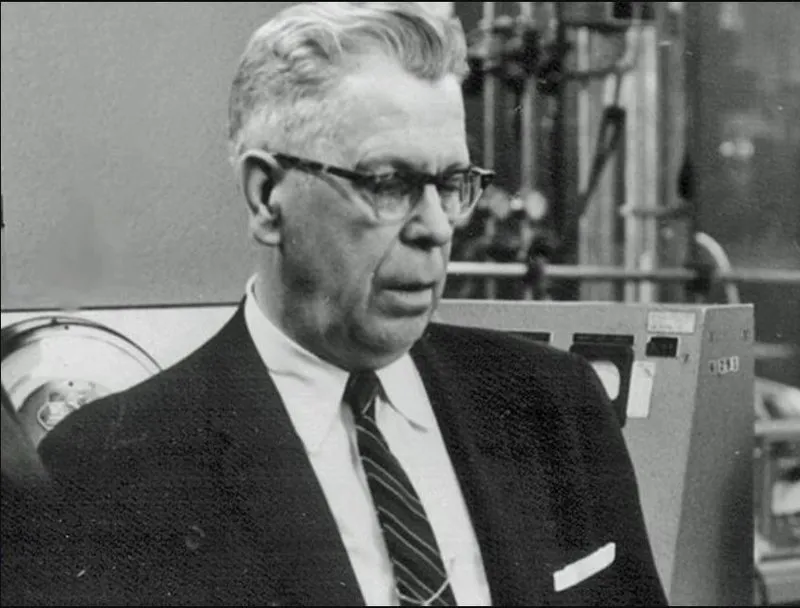 Photo: Percy Spencer, via turntable.kagiso.io
The 50-year-old engineer had already earned over 100 patents during his career, but this accidental discovery would become his most famous. Spencer quickly grabbed some popcorn kernels and held them near the magnetron. They popped. Then he tried an egg, which exploded all over a colleague's face. Within months, Raytheon was racing to patent what they called "microwave cooking."
From Military Secret to Kitchen Reject
The first commercial microwave oven, the "Radarange," hit the market in 1947 with all the subtlety of a refrigerator-sized tank. At $5,000 (roughly $60,000 today), it was marketed exclusively to restaurants and industrial kitchens. The machine required special plumbing and weighed 750 pounds—not exactly what suburban housewives were looking for.
Early marketing materials read like science fiction. Raytheon promised "electronic cooking" that would "revolutionize food preparation." But Americans weren't buying it, literally. The few restaurants that did invest complained that food cooked unevenly and tasted strange. Critics dismissed it as an expensive gimmick that would never catch on.
The problem wasn't just the price—it was trust. Post-war America was suspicious of anything involving radiation, even the harmless microwaves Spencer had discovered. Food industry experts warned that microwave cooking would destroy nutrition and flavor. Home economists declared it would never replace traditional ovens.
The Long Road to Counter Space
It took two decades and multiple corporate ownership changes before the microwave found its way into American homes. In 1967, Amana (now owned by Raytheon) introduced the first countertop model at $495. It was still expensive, but at least it fit in a kitchen.
The real breakthrough came during the 1970s energy crisis. Suddenly, an appliance that cooked food in minutes using less electricity than a conventional oven didn't seem so ridiculous. Working women, who were entering the workforce in record numbers, embraced the speed and convenience. By 1975, microwave sales were doubling every year.
Japanese manufacturers like Sharp and Panasonic entered the market in the late 1970s, driving prices down through mass production. What had once cost more than a car was now affordable for middle-class families. By 1986, more American homes had microwaves than dishwashers.
The Invisible Revolution
Today, over 90% of American households own a microwave oven, yet most people take the technology completely for granted. We use it to reheat leftovers, defrost frozen dinners, and warm up coffee—hardly the "electronic cooking revolution" Raytheon once promised.
The microwave's success lies not in replacing traditional cooking, but in filling a gap nobody knew existed. It democratized convenience food, enabled the frozen meal industry, and gave busy families a way to eat together even when schedules didn't align. College students and office workers found liberation in three-minute meals.
Spencer's chocolate bar accident created more than just an appliance—it fundamentally changed American eating habits. The microwave made possible everything from Hot Pockets to microwave popcorn, creating entire product categories that didn't exist before.
The Unsung Kitchen Hero
Perhaps the most remarkable thing about the microwave is how unremarkable it has become. Unlike smartphones or cars, which we actively appreciate, the microwave operates in the background of American life. It's the kitchen equivalent of a utility—essential but invisible.
Percy Spencer died in 1970, just as his accidental invention was beginning its conquest of American kitchens. He lived long enough to see the first countertop models but never witnessed the microwave's complete cultural takeover. His melted chocolate bar had become the foundation of a multi-billion-dollar industry that touches nearly every American home.
The next time you hear that familiar hum and see that yellow light spinning, remember: you're witnessing the legacy of one man's ruined candy bar and the 30-year journey from laboratory curiosity to kitchen necessity. Sometimes the most transformative innovations are the ones we notice least.