The Soggy Mistake That Launched America's Breakfast Revolution
The Night That Changed Breakfast Forever
Will Kellogg was having a terrible week. It was 1894, and he was working late again at his brother John's Battle Creek Sanitarium in Michigan, a health retreat where wealthy patients came to cure their ailments through bizarre dietary experiments. The brothers had been trying to create a digestible bread substitute for their patients when disaster struck — Will accidentally left a batch of boiled wheat sitting out overnight.
In an era when food waste meant real financial loss, throwing away an entire batch wasn't an option. The next morning, staring at the soggy, unappetizing mess, Will made a decision that would accidentally create one of America's most beloved breakfast foods. Instead of starting over, he decided to run the mushy wheat through their roller machine anyway.
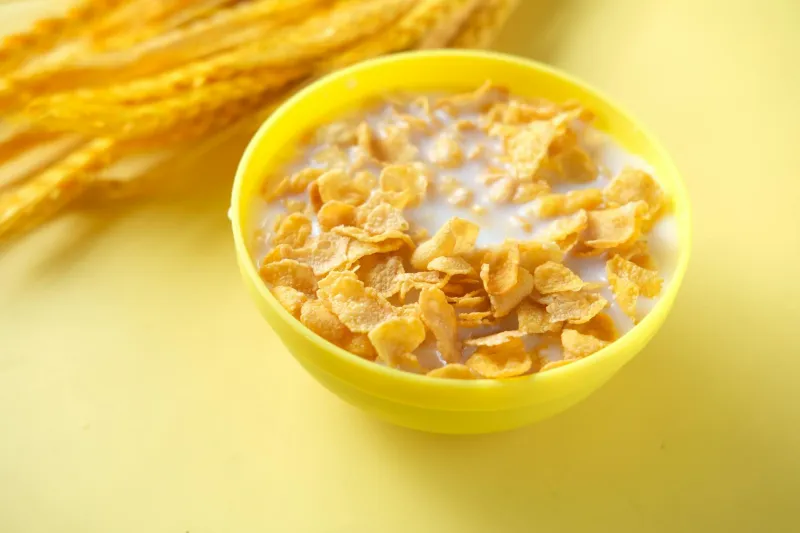
What came out wasn't bread. It wasn't even close to what they'd intended. Instead, the wheat emerged as thin, crispy flakes — something completely unexpected and oddly appealing.
From Medical Experiment to Morning Ritual
The Kellogg brothers weren't trying to revolutionize breakfast. They were obsessed with creating "health foods" for their sanitarium patients, most of whom suffered from digestive problems that the medical establishment of the 1890s barely understood. Their facility promoted vegetarianism, exercise, and bizarre treatments like electrical therapy and yogurt enemas — all in the name of "biological living."
John Kellogg, the older brother and a trained physician, believed that most illnesses stemmed from poor digestion. He'd spent years experimenting with grain-based foods that would be easier on the stomach than the heavy, meat-centric diet most Americans consumed. The brothers had already created a coffee substitute and various grain crackers, but nothing had captured widespread attention.
When they served those first accidental flakes to sanitarium patients, the response was immediate and enthusiastic. Patients began requesting the crispy wheat flakes specifically, and some even asked to take boxes home with them. Word spread beyond the sanitarium walls — people wanted to buy this strange new food.
The Business Breakthrough Nobody Planned
Will Kellogg quickly realized they'd stumbled onto something bigger than a sanitarium health food. While his brother John remained focused on medical applications, Will saw commercial potential. He began experimenting with different grains, eventually perfecting the process with corn, which created even lighter, crispier flakes.
But turning an accidental discovery into a business wasn't simple. The brothers spent years perfecting their manufacturing process, learning how to control moisture levels, temperature, and timing to consistently produce the crispy texture that made their flakes special. They had to invent entirely new machinery and develop techniques for mass production that had never been attempted with grain products.
By 1906, Will had launched the Battle Creek Toasted Corn Flake Company, later renamed Kellogg's. He added sugar to make the flakes more appealing to children — a controversial decision that his health-obsessed brother opposed. This single choice would help transform cereal from a medicinal food into a mainstream breakfast staple.
How One Mistake Built a Breakfast Empire
The timing couldn't have been better. America in the early 1900s was urbanizing rapidly, and traditional farm breakfasts of eggs, meat, and heavy breads were becoming impractical for city dwellers. Families needed something quick, convenient, and appealing to children. Kellogg's flakes offered all three.
Will Kellogg proved to be a marketing genius. He offered free samples, created eye-catching packaging, and launched advertising campaigns that positioned cereal as a modern, healthy alternative to traditional breakfasts. He understood that he wasn't just selling food — he was selling a new way of life.
The success attracted competitors. C.W. Post, a former sanitarium patient, launched his own cereal company just down the road in Battle Creek. Soon dozens of companies were producing their own versions of breakfast flakes, turning the small Michigan town into the unlikely center of America's breakfast revolution.
The Legacy of a Forgotten Pot
Today, Americans consume over 2.7 billion boxes of cereal annually, generating more than $20 billion in retail sales. The breakfast aisle in any American grocery store contains dozens of varieties, from simple corn flakes to elaborate sugar-coated creations that would horrify the health-conscious Kellogg brothers.
But it all traces back to that soggy pot of wheat that Will Kellogg couldn't bring himself to throw away. His decision to experiment rather than waste created an entirely new food category and fundamentally changed how America eats breakfast.
The irony isn't lost on food historians: the Kellogg brothers were trying to create the perfect health food, but their accidental discovery became the foundation for an industry often criticized for its sugar content and marketing to children. Yet their core innovation — transforming grains into light, crispy, convenient breakfast foods — remains the basis for how millions of Americans start their day.
That forgotten pot of wheat in a Michigan barn didn't just create a successful company. It accidentally launched a breakfast revolution that's still feeding America more than 130 years later.