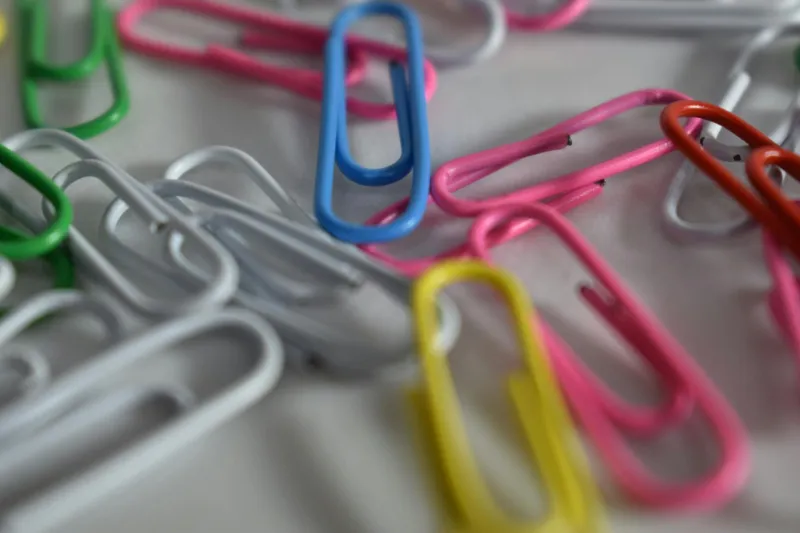
The Problem Nobody Saw Coming
In 1899, Johan Vaaler was having a bad day at the Norwegian patent office. Papers were sliding out of stacks, documents were getting mixed up, and the traditional methods of keeping things together—string, wax seals, or simply folding corners—were driving him crazy. As a patent clerk, Vaaler dealt with more paperwork than most people could imagine, and he was sick of the chaos.
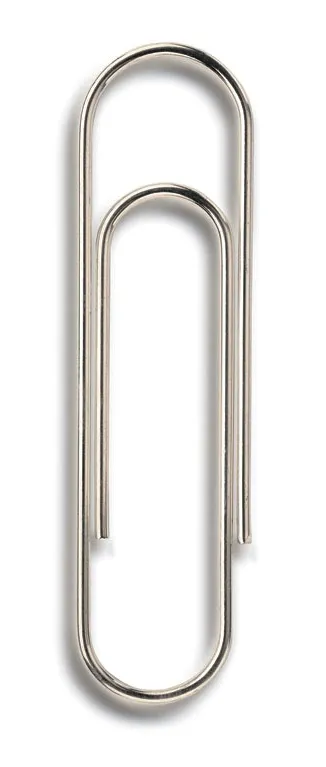 Photo: Johan Vaaler, via i.pinimg.com
What happened next seems almost embarrassingly simple: he grabbed a piece of wire, bent it into a double loop, and slipped it over a stack of papers. It held. It was removable. It didn't damage the documents. And somehow, in all of human history, nobody had thought to do this before.
Five Thousand Years of Missing the Obvious
Here's what makes the paper clip's late arrival so baffling: humans had been working with metal for millennia. We'd built the pyramids, forged swords, and crafted intricate jewelry. Wire itself had existed since ancient times. Paper had been around for over a thousand years in Europe. Yet somehow, the simple act of bending wire into a clip shape eluded everyone until the tail end of the 19th century.
Before Vaaler's invention, people used some pretty creative solutions. Medieval scribes pierced holes in parchment and threaded ribbon through them. Victorian office workers relied on straight pins, which often rust-stained important documents. Some simply folded paper corners in elaborate origami-like patterns. Others used string and sealing wax—messy, permanent, and time-consuming.
The closest anyone came was the "gem clip," patented by William Middlebrook in 1899 (just months after Vaaler), but even that was more complex than necessary. Vaaler's design was different: two loops, one inside the other, creating tension that held papers without puncturing them.
 Photo: William Middlebrook, via cache.legacy.net
The Patent War Nobody Remembers
What followed Vaaler's breakthrough was a patent frenzy that would make today's tech companies blush. Suddenly, everyone was bending wire and claiming they'd invented the "real" paper clip. Between 1899 and 1910, over 50 different paper clip designs were patented in the United States alone.
There was the "Konaclip" (shaped like a question mark), the "Rinklip" (with decorative ridges), and the "Niagara Clip" (which looked like a tiny waterfall). Most were unnecessarily complicated, trying to improve on Vaaler's simple design. Few succeeded.
The legal battles were intense. Companies sued each other over wire thickness, loop angles, and manufacturing processes. The Gem Manufacturing Company alone filed dozens of lawsuits, trying to protect their particular bend pattern. It was capitalism at its most absurd: grown men in courtrooms arguing about the optimal way to fold a piece of wire.
The Quiet Symbol of Resistance
By World War II, the paper clip had become so mundane that most people forgot it even had an inventor. But in Nazi-occupied Norway, Vaaler's creation took on unexpected significance. When the Germans banned Norwegian flags and national symbols, citizens began wearing paper clips on their lapels as a subtle form of resistance.
The symbolism was perfect: like Norway itself, the paper clip was simple, functional, and stronger than it looked. It could bend under pressure but wouldn't break. Norwegian students started the trend, and it spread so widely that German authorities eventually banned paper clip jewelry too. Wearing one could get you arrested.
Vaaler himself lived to see his invention become a symbol of his country's defiance, though he died in 1910, long before the war. There's now a giant paper clip sculpture in Oslo, commemorating both the invention and its role in Norwegian resistance.
Why It Took So Long
The paper clip's delayed arrival reveals something fascinating about human innovation. Sometimes the most obvious solutions are the hardest to see, precisely because they're so simple. We tend to look for complex answers to complex problems, missing the elegant fixes hiding in plain sight.
Vaaler's breakthrough required a specific convergence: mass-produced wire (thanks to industrial manufacturing), standardized paper sizes (thanks to office bureaucracy), and enough paperwork to make the problem urgent (thanks to modern government and business). Before the 1890s, most people simply didn't handle enough documents to need a dedicated fastening system.
The Billion-Dollar Bend
Today, Americans buy over 20 billion paper clips annually. That simple bend Vaaler made in frustration has generated billions in revenue and spawned an entire industry. The basic design hasn't changed much—modern clips are still just bent wire, though they come in colors, sizes, and specialty shapes.
Tech companies have tried to "disrupt" the paper clip with digital alternatives, but none have stuck. There's something irreplaceably satisfying about the physical act of clipping papers together, and the clips double as makeshift tools for everything from resetting electronics to picking locks.
The Lesson in the Loop
The paper clip's story is a reminder that innovation doesn't always require breakthrough technology or massive investment. Sometimes the most transformative inventions are hiding in the simplest solutions, waiting for someone frustrated enough to try bending the rules—or in this case, bending the wire.
Johan Vaaler probably never imagined that his moment of office frustration would create one of the world's most ubiquitous objects. But that's often how the best inventions happen: not in grand laboratories or corporate boardrooms, but in everyday moments when someone finally says, "There has to be a better way."