The Two-Letter Word That Started as a Joke and Ended Up Running the World
The Two-Letter Word That Started as a Joke and Ended Up Running the World
You've probably typed "OK" at least a few times today. Maybe more. It ends text conversations, confirms appointments, closes emails, and settles arguments. It's on keyboards, in code, embedded in international aviation communication, and recognized in virtually every language on Earth.
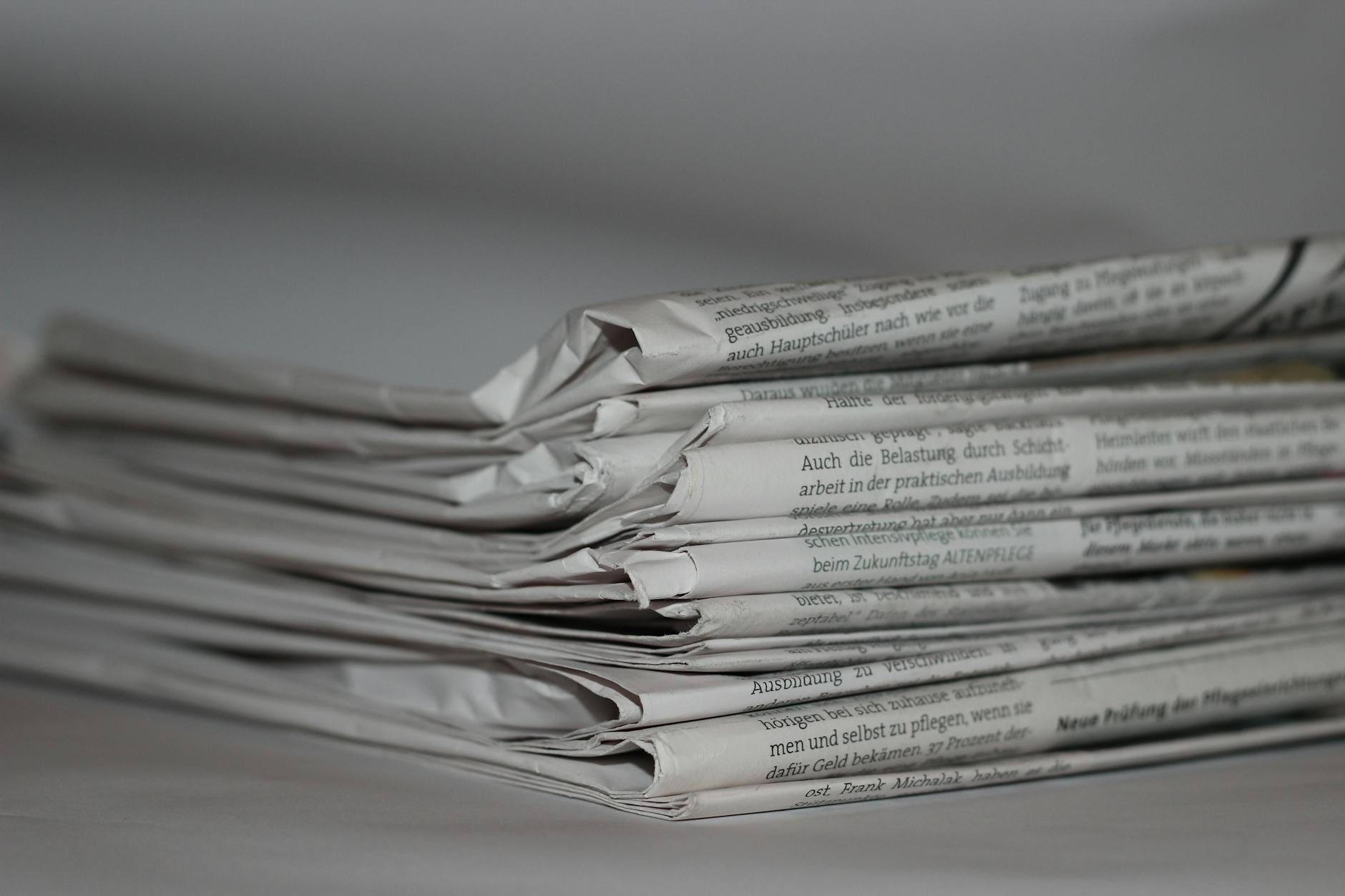
For something so universal, you'd expect a grand origin story — a philosophical breakthrough, maybe, or a coinage by some brilliant linguist. Instead, the most credible theory about where "OK" came from points to a deliberate joke printed in a Boston newspaper on a Saturday morning in March 1839. A joke that, against all reasonable odds, never stopped spreading.
Boston's Short-Lived Love of Abbreviation Humor
To understand how "OK" happened, you need to understand a very specific kind of humor that was fashionable in American newspapers during the late 1830s. It was the era of ironic abbreviations — writers would take common phrases, deliberately misspell them, and then abbreviate the misspelled version as a kind of winking in-joke.
"OW" stood for oll wright (a mangled version of "all right"). "KY" meant know yuse ("no use"). "NS" was nuff said. These were considered clever at the time, which says something about 1839 Boston, but the trend was real and well-documented.
On March 23rd of that year, the Boston Morning Post published a piece that used "OK" as an abbreviation for oll korrect — a jokey misspelling of "all correct." The editor, Charles Gordon Greene, almost certainly expected it to land as a knowing wink to readers familiar with the abbreviation game and then disappear, the way most newspaper jokes do.
Except it didn't disappear.
The phrase got picked up by other papers. It spread to New York, then Philadelphia, then south and west. Within a year, it had traveled far enough to get caught up in something much bigger than a newspaper column.
How a Presidential Campaign Made "OK" Permanent
The 1840 presidential election featured Democrat Martin Van Buren running for reelection against Whig candidate William Henry Harrison. Van Buren was from Kinderhook, New York — a fact that his supporters decided to lean into with a campaign club they called the Old Kinderhook Club, shortened to "OK."
"OK" started appearing on buttons, banners, and in campaign slogans. Van Buren supporters would shout it at rallies. The overlap with the existing abbreviation — oll korrect, meaning everything is fine — was too good to ignore, and the two meanings fed each other. Van Buren lost the election badly, but the word had been turbocharged by the exposure in a way that no single newspaper column ever could have managed.
Language historian Allan Metcalf, who has written the definitive book on "OK," credits this political moment as the turning point. Before the campaign, "OK" was a regional joke. After it, the word had national name recognition.
The Telegraph, the Railroad, and a Word Built for Speed
What kept "OK" alive and growing was its sheer usefulness. As the telegraph expanded across the United States in the 1840s and 1850s, operators needed a fast, unambiguous way to confirm that a message had been received and understood. "OK" was perfect. Two characters. Clear meaning. Hard to misread.
Railroad dispatch systems adopted it for the same reasons. When you're communicating across hundreds of miles with limited bandwidth — whether by telegraph key or early telephone — brevity isn't just stylish, it's functional. "OK" filled a practical gap that longer affirmations couldn't.
By the time the Civil War ended and the country started industrializing at scale, "OK" had embedded itself in business communication, logistics, and everyday speech. It had stopped being a joke and started being infrastructure.
From Punchline to the Language of the Planet
The 20th century finished the job. As American culture — its movies, music, military presence, and eventually its technology — spread globally, "OK" traveled with it. Allied soldiers used it during both World Wars. Hollywood exported it in every film. NASA used it in mission communications. And then the internet arrived.
If the telegraph was the first technology to demonstrate how useful "OK" could be, digital messaging was the proof of concept at planetary scale. Every chat app, every email thread, every comment section in every language uses some version of it. The thumbs-up emoji is, in many ways, just a visual "OK."
Linguists have noted that "OK" is almost certainly the most recognized word — or word-like expression — on Earth. It appears in languages that have borrowed almost nothing else from English. There are speakers who know almost no English but know "OK."
The Joke That Outlasted Everything
What makes this story genuinely strange is the gap between the cause and the effect. A newspaper editor in Boston wrote a throwaway abbreviation joke in a trend that had already peaked. There was no vision behind it, no plan, no sense that this particular combination of letters was special.
And yet here we are, nearly 200 years later, using it dozens of times a day without a second thought.
Some words earn their place in a language through necessity or genius. "OK" earned its place by being in the right place at the right time, getting a lucky boost from a presidential campaign, and then being so perfectly shaped for fast communication that every new technology kept reaching for it.
Next time you fire off an "OK" in a text message, you're closing a loop that started with a punchline in an 1839 Boston newspaper. Charles Gordon Greene had absolutely no idea what he was starting.